Best natural dog food brands (2026): an honest comparison
Cooked, BARF or dehydrated: which natural dog food brands are genuinely worth it, how to choose between them and which one fits your case.
In this article
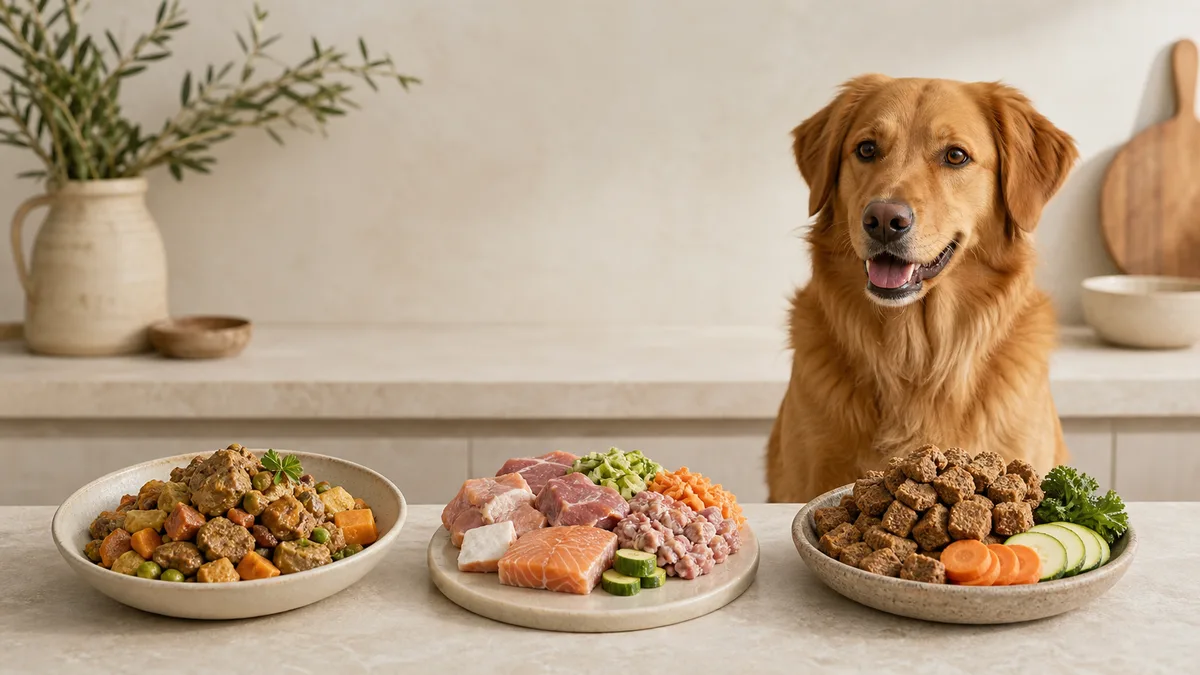
The best natural dog food brands in Spain combine three things: a complete and balanced formula validated by vets, recognisable ingredients with meat or fish as the base, and a price you can sustain. By those criteria, the standout cooked options are COCOSI, Dogfy Diet, Food for Joe, Guau&Cat and Wild Balance, and dehydrated ones like Naku. None is “the best” for every dog: it depends on whether you want cooked, raw (BARF) or dehydrated, on your budget and on your dog’s needs. Here we compare them with a discerning eye, no paid listings.
Before the list: what makes a brand good
“Natural food” isn’t a regulated label, so anyone can slap it on. These are the criteria that really separate a good brand from a marketing one:
- Complete and balanced formula. It should cover all the nutrients according to FEDIAF (Europe) or AAFCO (US) guidelines, not just “lots of meat”. That’s what separates a serious diet from an unbalanced treat.
- Meat or fish as the first ingredient, a specific one (“chicken”, “salmon”), not “by-products” or filler grain.
- Professional formulation: vets or nutritionists behind the recipes.
- Full transparency on the label. If you can’t see the exact composition, be suspicious.
- Sustainable price. The best diet is the one you can keep up without giving up on it after two months.
An honest aside: searches for “best brands” tend to throw up kibbles like Royal Canin, Hills or Purina. They’re good kibbles with veterinary backing, but they’re a different category (dry, ultra-processed). Here we’re talking about natural food —cooked, raw or dehydrated—, which is what most people are after when they want to make the switch.
The best natural dog food brands
An honest selection of real brands from the Spanish market, by type. Prices are indicative (they vary depending on the dog’s weight).
| Brand | Type | Species | Where it stands out |
|---|---|---|---|
| COCOSI | Cooked semi-moist + wet | Dogs and cats | Available at vet clinics, major retailers (Carrefour) and online |
| Dogfy Diet | Cooked | Dogs only | Brand awareness and scale; very polished. High-end price and subscription only |
| Food for Joe | Customisable cooked | Dogs | Tailored menus and home delivery |
| Gosbi (Natsbi) | Steam-cooked | Dogs | Backed by a long-established Spanish veterinary brand |
| Guau&Cat | Cooked + BARF + snacks | Dogs and cats | Value for money, one-off purchase (no subscription), formulated by their in-house vet team |
| Naku | Dehydrated (rehydrated) | Dogs and cats | Non-frozen format: easy to store and transport |
| Natuka | Cooked and BARF | Dogs and cats | Wide variety of menus and proteins |
| Wild Balance | Cooked and BARF | Dogs and cats | Widely available (Kiwoko, Amazon, El Corte Inglés), single-protein recipes |
How to read this table: if you prioritise value for money and flexibility (and maybe you also have a cat), take a look at Guau&Cat, Natuka or Wild Balance. If brand awareness matters to you and price isn’t a barrier, Dogfy Diet; you can read our honest analysis in Dogfy Diet: reviews and alternatives. If you’re after a reputation solidly verified across several platforms, Food for Joe sustains it best of this comparison. If you don’t want to deal with the freezer, Naku’s dehydrated option. If you’d rather buy it in a physical shop or supermarket with no subscription, COCOSI is available at Carrefour and Supermercados MAS. And if raw appeals to you, take a look first at our BARF diet guide. The data for each brand is verifiable on your own — you’ll find the breakdown of real reviews, price and alternatives for each one in its own review.
Choose the type first, then the brand
The brand matters less than getting the format right for your case:
- Low-temperature cooked: the most popular middle ground. It keeps almost all the advantages of natural food with less risk than raw. Ideal for making the switch without complications.
- BARF (raw): for anyone after the closest thing to the ancestral diet and willing to take on the formulation and hygiene. It has real advantages and real risks.
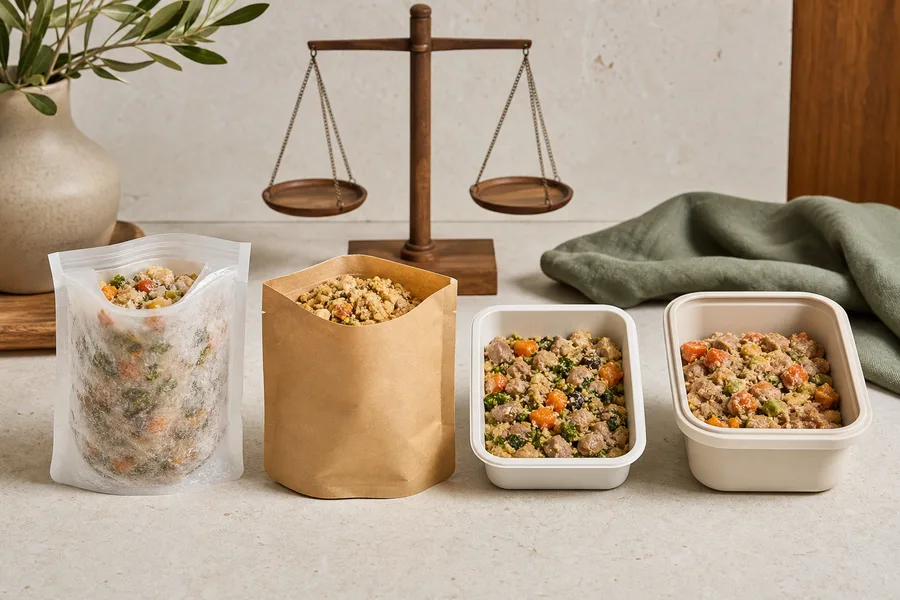
- Dehydrated: natural but with no cold chain; you rehydrate it with water. Convenient and shelf-stable.
- Natural kibble: it’s still kibble, but with better ingredients. The cheapest and most convenient option.
If you’re still torn between these routes, our guide to choosing natural dog food explains it in detail.
How to choose yours in 3 questions
- How much can you sustainably spend per month? Set the range before falling in love with a brand. There’s equivalent quality at very different prices.
- Cooked, raw or dehydrated? Decide the format based on your time, your freezer and your stomach for handling raw food.
- Does your dog have special needs? (age, excess weight, sensitive digestion, allergies). Look for brands with specific menus and, where there’s a medical condition, check with your vet.
And a golden rule: change the diet gradually, over 7-10 days, to avoid diarrhoea. You’ll find the step-by-step in the guide to switching your dog from kibble to natural food.
Frequently asked questions
What are the best natural dog food brands?
The ones offering a complete and balanced formula validated by vets, with meat or fish as the first ingredient and no excess grain. In cooked food, COCOSI, Dogfy Diet, Food for Joe, Guau&Cat and Wild Balance stand out; in dehydrated, Naku. The best one for you depends on the type, your budget and your dog’s needs.
Which dog food brand has the best quality?
There’s no single winner. The best quality comes from brands with professional formulation (that meet FEDIAF/AAFCO guidelines), recognisable ingredients with the animal protein listed first, and full transparency on the label. Be suspicious of anyone who won’t let you see the exact composition.
Is natural food better than a kibble like Royal Canin or Hills?
They’re different things. Those brands are kibbles with veterinary backing; cooked or BARF natural food goes for fresh ingredients and more moisture. A well-formulated natural food has advantages in digestibility and hydration, but a good balanced kibble is also valid. What’s decisive is the nutritional balance and whether you can keep it up.
Is natural dog food expensive?
It depends on the brand and the size of the dog. Premium cooked meals on subscription sit at the high end, but there are options of similar quality for around half the price, and dehydrated food usually works out cheaper per serving. The key is to choose one you can sustain every month.
Keep reading
 Comparisons & guides
 Best cooked natural dog food: 6 brands (2026)
Six cooked-food brands compared on price per kilo, how to buy and reviews. Guau&Cat is the cheapest per kilo; the others that publish a price run from €7.24 to €13.13/kg.
 Comparisons & guides
 Natural dog food without a freezer: options (2026)
Freezer-free doesn't mean the same for every brand. We compare six, from the price benchmark (Guau&Cat, frozen) to those that last months in the pantry.
 Comparisons & guides
 Arquivet alternatives: real price and reviews (2026)
Arquivet FreshHome is the only one on this list that doesn't need a freezer, but it's dog-only and its reputation barely has a sample to judge.