Homemade dog food: why it falls short and what to do
A homemade recipe for dogs is rarely complete: 95% of 200 recipes fell short on at least one nutrient. What the studies say and how to do it properly.
In this article
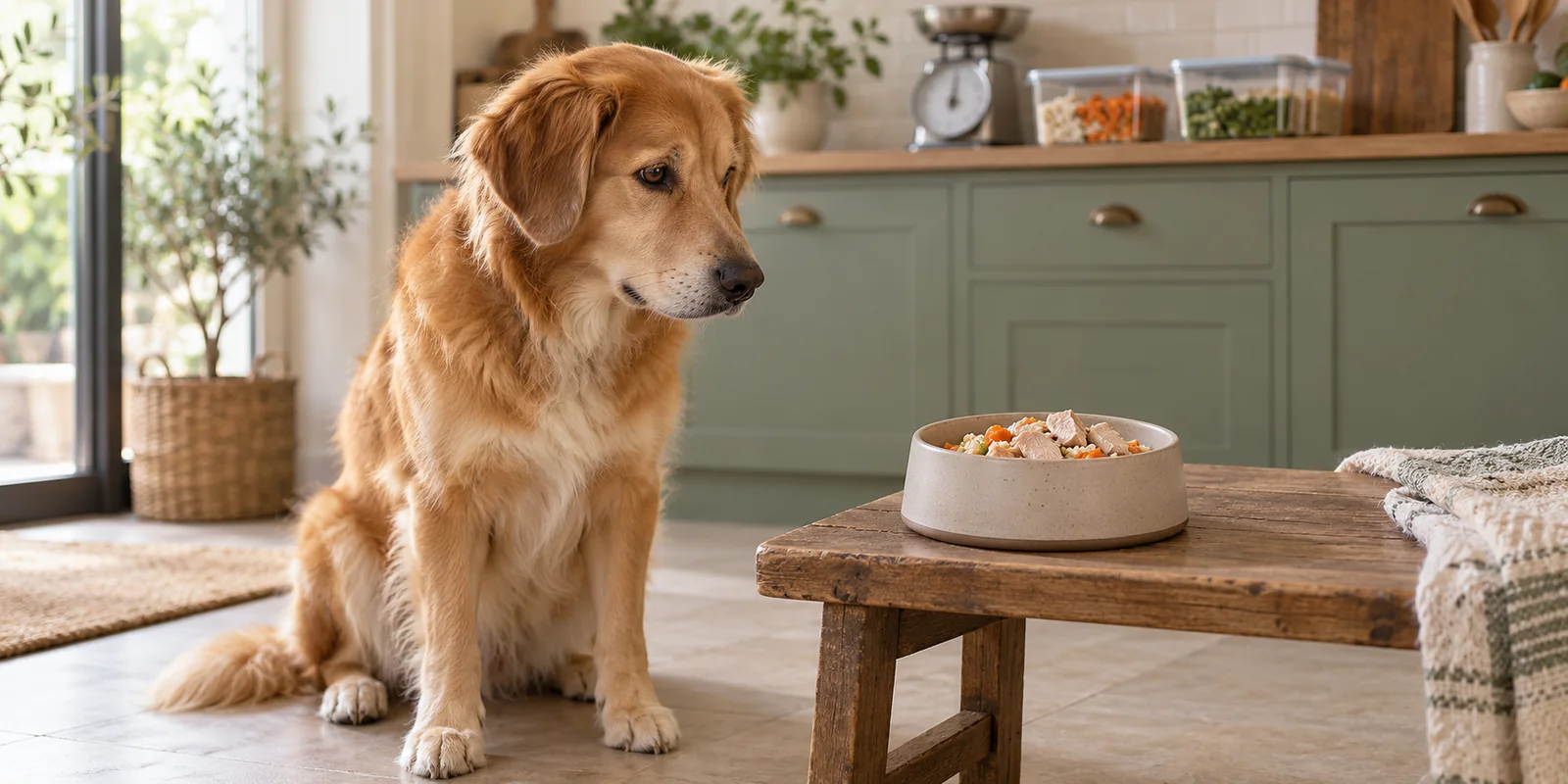
Homemade dog food is rarely complete: in a UC Davis study of 200 recipes from books and websites, 95% fell short on at least one essential nutrient, and in another study of 1,726 home-prepared diets for real dogs, only 6% were potentially complete. You can cook for your dog, but with a recipe calculated for it by a veterinary nutritionist, not one from the internet. Here is what the studies say, what goes wrong and what to do.
Why people choose homemade dog food
These are the reasons given by the lead author of the UC Davis study:
- You want to control what it eats. You know what’s on its plate and where it comes from.
- You want to give it something more natural. Food that looks like what you’d cook at home.
- You don’t trust pet food companies. You’d rather not depend on them.
They’re legitimate reasons, and there’s nothing wrong with cooking. What fails is the recipe: one that looks sensible rarely covers everything a dog needs.
What the studies say about homemade dog food
A complete diet covers all essential nutrients in the reference amounts (AAFCO’s in the US or FEDIAF’s in Europe). Three different analyses, with the same result:
| Study | What it analysed | Result |
|---|---|---|
| UC Davis, 2013 | 200 recipes from books, websites and veterinary manuals | 95% fell short on at least one essential nutrient; only 9 met AAFCO’s minimums |
| Dog Aging Project, 2025 | 1,726 home-prepared diets of real dogs | Only 6% were potentially complete according to AAFCO |
| Recipes in Portuguese, 2017 | 106 recipes for dogs and cats, against FEDIAF guidelines | All had at least one nutrient below the recommendation; 48% didn’t specify ingredients or amounts |
The UC Davis study adds two findings: recipes written by veterinarians fell short less often, but most still had a deficiency, and the 4 of the 200 written by board-certified veterinary nutritionists had an acceptable nutrient profile for adult dogs.
What almost always goes wrong in a homemade recipe
- Specific nutrients are missing. In UC Davis, mainly choline, vitamin D, zinc and vitamin E; in the Portuguese recipes, also calcium, copper and iron. According to the authors, this can lead to immune dysfunction, fatty liver or musculoskeletal abnormalities.
- The instructions are vague. 92% of recipes made the owner assume something (an ingredient, the method or the supplement), and 85% didn’t give the calories or what size of dog it was for.
- Rotating recipes doesn’t fix it. Since many share the same deficiencies, the authors consider it unlikely that rotating them will correct them.
- Dangerous ingredients slip in. Grapes and raisins (kidney damage), onion and garlic (damage to red blood cells), chocolate, xylitol and macadamia should never go on its plate, according to the ASPCA list. If you suspect it has eaten any, note the amount and call your vet.

How to make homemade dog food properly
If you still want to cook, the rule in the WSAVA statement is that any diet should be safe and complete and balanced. In practice:
- Start from a recipe made for your dog by a veterinary nutritionist. UC Davis advises avoiding general recipes from books and the internet and consulting a board-certified one. Ask for a diplomate in veterinary nutrition (in Europe, of the ECVCN college: there is a directory of specialists).
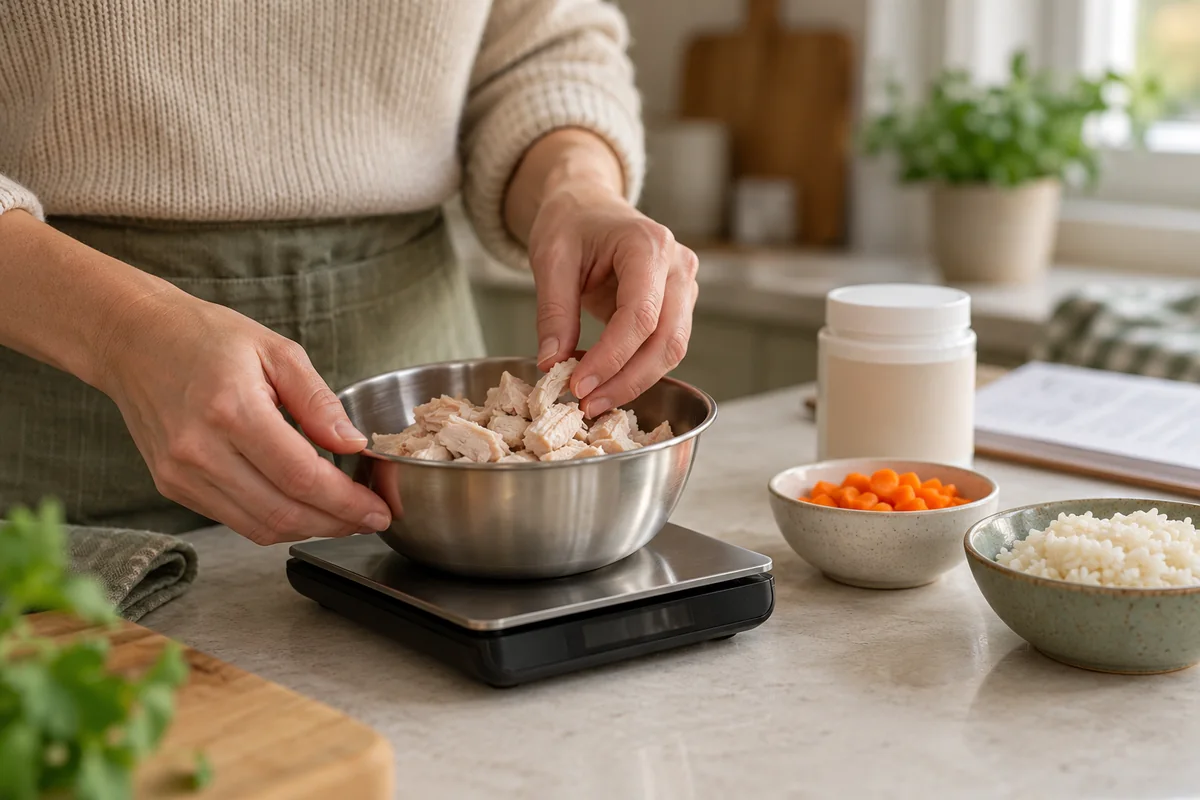
- Follow the recipe to the gram. With scales, the same ingredients and the supplement it specifies, without substituting anything on your own.
- Review it with your vet. Have them assess how it suits your dog (weight, body condition, stools, coat) and whether any tests are needed, especially if there’s an illness involved.
- Don’t improvise as you go. Adding a bit of this or that can throw it out of balance again.
A reliable recipe states, at a minimum, exact ingredients and amounts, the method, the supplement if it uses one and the calories and dog size it was calculated for: exactly what most of the recipes in the UC Davis study lacked. Also, the studies analysed recipes for healthy adult dogs: with a puppy or a dog with an illness, the recipe should be designed by the specialist for that case.
A different matter is the bland diet: a few days of chicken and rice for a digestive problem, with your vet, not a way to feed a dog.
The alternative: natural food that’s already formulated
If you like the idea of homemade but don’t want to gamble on the recipe, the simplest way out is a natural food that the brand presents as complete: the label must state whether it is complete or complementary feed, according to Regulation (EC) 767/2009. It’s the closest thing to cooking yourself, but with the recipe already formulated by the brand.
You’ll find brands with price per kilo in our cooked food comparison and, if you prefer raw, in the best raw dog food comparison, with the WSAVA’s position on raw.
To get your bearings on the ration, there’s our weight table; and for moving from kibble to any of them, our transition guide.
What if you have a cat?
The same thing happens with cats: in the Portuguese recipes, 100% of those designed for cats had iron below the recommended level, and they also need taurine in their diet. We explain it in our taurine for cats guide.
Frequently asked questions
Is homemade dog food good?
It can be, but only with a recipe calculated for your dog by a veterinary nutritionist. General ones from books and websites are rarely complete: in a UC Davis study, 95% of 200 recipes fell short on at least one nutrient.
What homemade food can you give a dog?
As a sole diet, only that of a recipe from a veterinary nutritionist. As an extra, the WSAVA and AAHA recommend that non-complete foods, such as treats, make up no more than 10% of daily energy. Always avoid toxic foods such as grapes and raisins, onion and garlic, chocolate or xylitol.
Can I just give it chicken and rice?
As a sole diet, no: a recipe that simple is unlikely to cover all nutrients. For a few days it can help with a digestive problem, on your vet’s advice (see our bland diet guide).
How much homemade food should a dog eat?
It depends on the recipe and the dog: a well-made recipe states the calories and the dog size it was calculated for. 85% of the recipes in the UC Davis study didn’t.
Is homemade food better than kibble?
It depends on whether it is complete and safe, not on whether it’s homemade: the WSAVA asks that any diet, commercial cooked, raw or homemade, be safe and complete and balanced. A homemade one without a specialist’s recipe rarely is.
Is there homemade dog food delivered to your door?
Yes, as already-formulated cooked natural food: it’s similar to homemade, but arrives with the recipe prepared by the brand. You’ll find brands with price per kilo in our cooked food comparison.
This guide is informational and does not replace a consultation with your vet.
Keep reading
 Nutrition
Natural dog treats: which to give and which to avoid (2026)
Not everything sold as a natural treat is safe. We cover what to check before buying, what to avoid and where to find them, with real prices.
 Nutrition
My dog won't eat kibble: causes and when to worry
A dog that stops eating kibble may be bored, full of treats… or ill. Here's how to tell the difference before you start trying tricks.
 Nutrition
Raw (BARF) diet for cats: real risks, portions and what vets actually say
Neither demonised nor idealised: what the evidence says about raw feeding in cats, the toxoplasma risk almost nobody mentions, and how to reduce it.