My dog won't eat kibble: causes and when to worry
A dog that stops eating kibble may be bored, full of treats… or ill. Here's how to tell the difference before you start trying tricks.
In this article
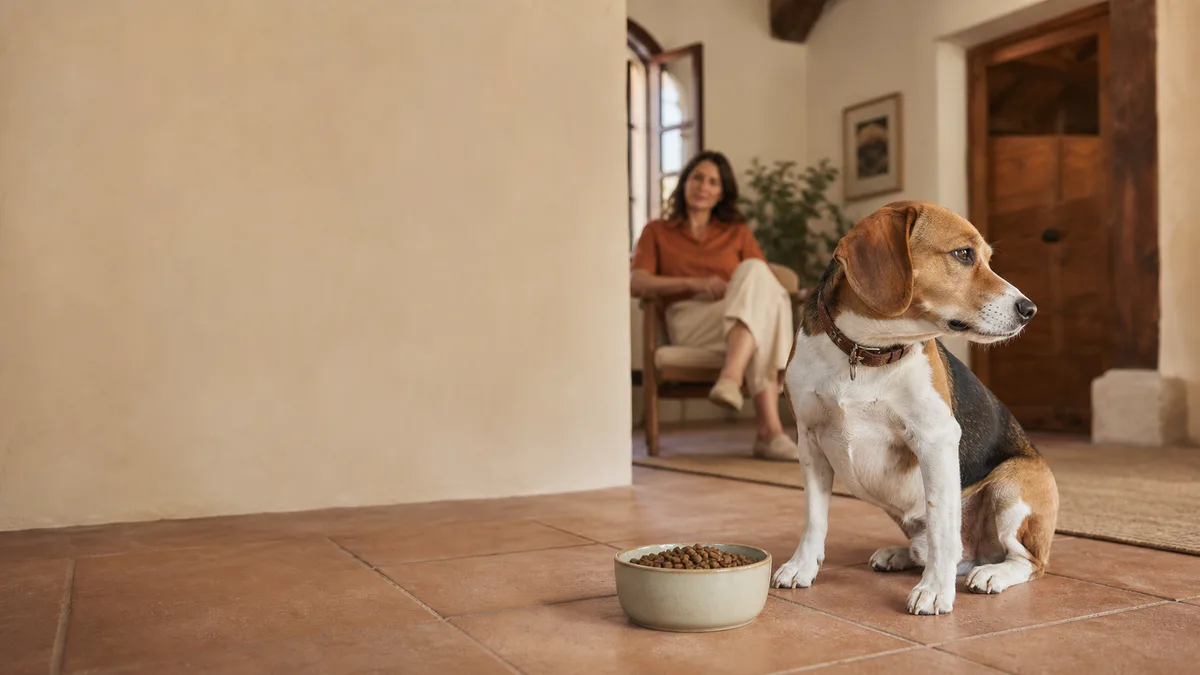
If your dog won’t eat kibble, the first step isn’t finding a trick to get him to eat it: it’s ruling out illness. In a healthy adult dog, more than 24 hours without eating anything warrants a call to the vet, and if he is also lethargic, vomiting or struggling to chew, there’s no need to wait for those 24 hours to pass. Only once you’ve ruled out the medical side does the rest make sense: whether he’s full of treats, whether the kibble has gone rancid, whether he’s learned that waiting brings something better, or whether he simply doesn’t like that food.
Searching for this answer, you’ll mostly find articles published by kibble manufacturers and pet shops. That matters: the possibility that the problem is the kibble is unlikely to come from them. We don’t sell food, so we’ll tell the whole story.
First: “eating less” is not the same as “not eating at all”
They’re different, and the urgency is different too.
- Eating less than usual (vets call it hyporexia): leaves part of the ration, takes longer, dawdles. Usually mild, and often with an everyday explanation.
- Eating absolutely nothing (anorexia): refuses the kibble and everything else, including the things he’d normally kill for. This is the one that matters. A dog that refuses his kibble but pounces on a piece of chicken has a palatability problem; a dog that also refuses the chicken has a medical problem until proven otherwise.
That test — offering something he loves and watching what he does — is the quickest, cheapest way to orient yourself at home.
Warning signs: when to see a vet
Go without waiting if the food refusal comes with any of these:
- Lethargy, apathy or weakness. A dog that isn’t eating and is subdued is a different picture from one that isn’t eating and is bouncing around.
- Vomiting or diarrhoea, especially with blood. You’ll find the detail in our guides on why your dog is vomiting and diarrhoea in dogs.
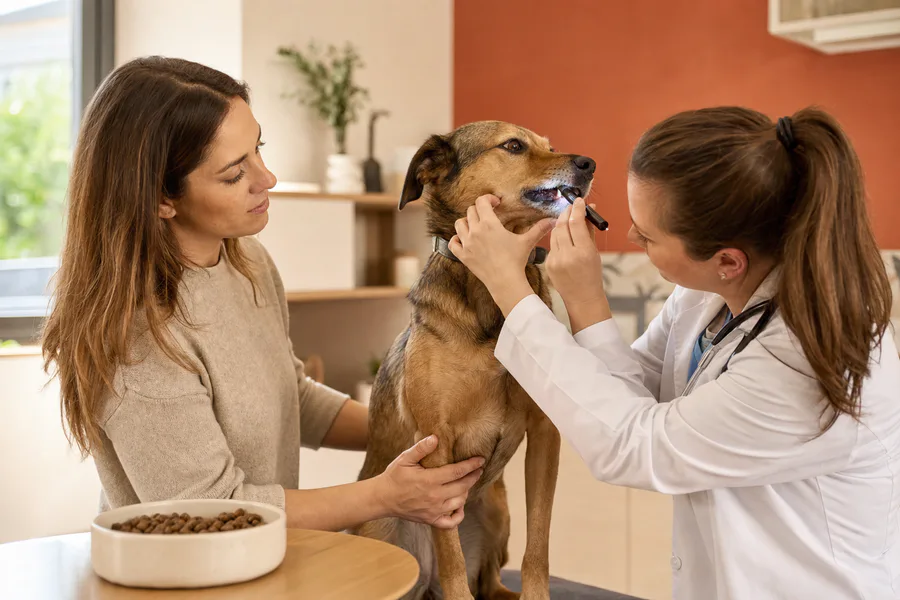
- Signs of pain when chewing: turning his head away from the food, chewing on one side only, dropping it, drooling, bad breath, or pawing at his face. Dental pain is one of the most common and most overlooked causes.
- He stops drinking or, conversely, drinks far more than usual.
- A swollen or tense abdomen, retching without bringing anything up, restlessness: in deep-chested breeds this can be gastric dilatation-volvulus, a life-threatening emergency that cannot wait hours.
- Visible weight loss over recent weeks.
And adjust the margin to the dog. In a healthy adult, 24 hours without food is a reasonable threshold to call. In puppies, toy breeds, geriatric dogs or dogs with an underlying condition (diabetes, kidney failure, cancer), reserves are far smaller and the risk of hypoglycaemia and dehydration is real: don’t wait, call the same day.
When there are symptoms, your vet decides. Nothing you read here replaces a physical examination.
If he’s healthy: why he’s refusing the kibble
With the medical side ruled out, these are the real causes, from most to least common.
He’s full without you realising
By some distance, the number one. Training treats, a bit of cheese, last night’s leftovers, the midday chew. It all adds up, and a small dog covers a good share of his daily calories with very little. To find out if this is you, run the test for three or four days: zero extras, ration only. Most “fussy dogs” start eating again on their own.
The practical rule is that treats shouldn’t exceed 10 % of daily calories. Above that, as well as filling him up, they unbalance the diet.
The kibble has gone rancid (and almost nobody checks this)
Kibble contains fat, and fat oxidises on contact with air and light. A bag opened six weeks ago in the garage doesn’t smell the way it did on day one, and a dog’s nose picks that up long before ours does. If the refusal started halfway through the bag, that’s a very good clue.
What to do: keep the kibble in its original bag, tightly closed, inside the airtight container rather than tipping it in loose — the bag has a barrier against grease and light that a plastic bin doesn’t — somewhere cool and dry. And buy sizes you can get through in four to six weeks. If you suspect it, open a fresh bag and compare.
The batch or the formula has changed
Brands reformulate without announcing it on the front of the pack. A change in protein source or fat coating can be enough for your dog to stop recognising it as the same food. Check the label against the previous bag if you still have it.
He’s learned to wait
This is the most human mechanism of all. The dog doesn’t eat, we worry, we add chicken. The next day he doesn’t eat, so we add more. Within days we’ve taught him that refusing the kibble pays. It isn’t stubbornness: it’s learning, and it works exactly like any other behaviour we reinforce without meaning to.
Heat, stress or changes at home
In summer, energy expenditure drops and many dogs eat a little less; that’s normal and gradual. A house move, a new family member, building work, or being left alone for longer can also switch off the appetite for a few days. If you’ve just adopted, give it time: eating poorly during the first few weeks while settling in is common.
He simply doesn’t like it
This is a legitimate answer and the one you’ll hear least, because whoever is writing usually sells kibble. Kibble is a dry food, low in moisture, with a flat aroma profile compared with fresh food. Some dogs accept it all their lives without a problem; others never quite do. If your dog is healthy, eats anything else with enthusiasm and has been at war with his kibble for months, persisting with tricks is treating the symptom.
What to do, step by step
- Rule out the medical. Offer something he loves. If he won’t take that either, or if any of the warning signs above are present, see the vet.
- Cut the extras for three or four days. No treats, no leftovers, no grazing. Just his food and water.
- Set mealtimes. Put the bowl down, leave it 15-20 minutes, then take it away whether he’s eaten or not. Offer it again at the next meal. No drama, no coaxing.
- Check the kibble. When did you open the bag? How do you store it? Has the batch changed? If in doubt, open a new one.
- Boost the aroma, not the flavour. A little warm water over the kibble releases the smell and is usually enough. If you use broth, make sure it is unsalted and free of onion and garlic (both toxic to dogs). Use it as a one-off nudge, not a rule.
- Exercise him before meals. A walk or a play session opens the appetite. Serving the ration in a puzzle feeder turns the meal into an activity, and for many bored dogs it changes their attitude completely.
- If nothing works within a week, rethink the diet with your vet rather than carrying on with tricks.
What not to do
- Forcing, restraining or putting food in his mouth. It creates aversion and can cause aspiration.
- Punishing or scolding for not eating. He doesn’t understand the punishment and starts associating the bowl with something unpleasant.
- Changing kibble every few days. As well as teaching him to hold out, abrupt diet changes cause diarrhoea. Any change of food should be gradual, over 7-10 days.
- Leaving a full bowl down all day. It removes the hunger signal, lets the kibble pick up moisture and go stale, and stops you knowing how much he’s actually eating.
- Giving table scraps to compensate. Many are unsuitable and some are outright toxic.
- Using appetite stimulants on your own initiative. Drugs for this exist, but they’re prescribed after a diagnosis. Self-medicating masks the very symptom your vet needs to see.
When a change of diet does make sense
If your dog is healthy, you’ve ruled out the medical side, sorted out mealtimes and treats, checked that the kibble is in good condition, and the refusal still continues week after week — then yes: the food may be the problem, and there’s nothing wrong with changing it.
The sensible alternatives to dry kibble involve more moisture and more palatability — wet food, gently cooked, dehydrated or raw — each with its own trade-offs in price, logistics and storage. None is automatically better: what matters is that it is complete and balanced and that you can sustain it month after month. It’s all broken down in our guide to choosing natural dog food, and if you decide to make the switch, in how to transition from kibble to natural food without upsetting his stomach.
And if your dog eats his kibble perfectly well, there’s no reason at all to change it. A good balanced kibble remains a valid option.
This guide is informational and does not replace a consultation with your vet.
Keep reading
 Nutrition
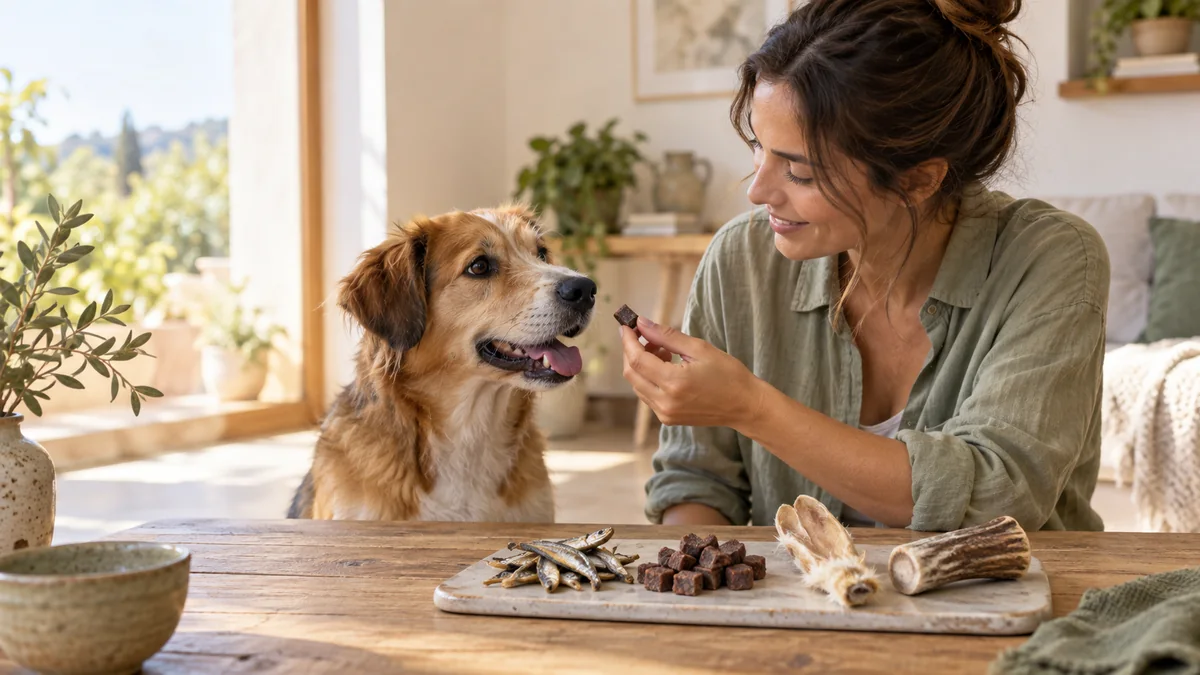
 Natural dog treats: which to give and which to avoid (2026)
Not everything sold as a natural treat is safe. We cover what to check before buying, what to avoid and where to find them, with real prices.
 Nutrition
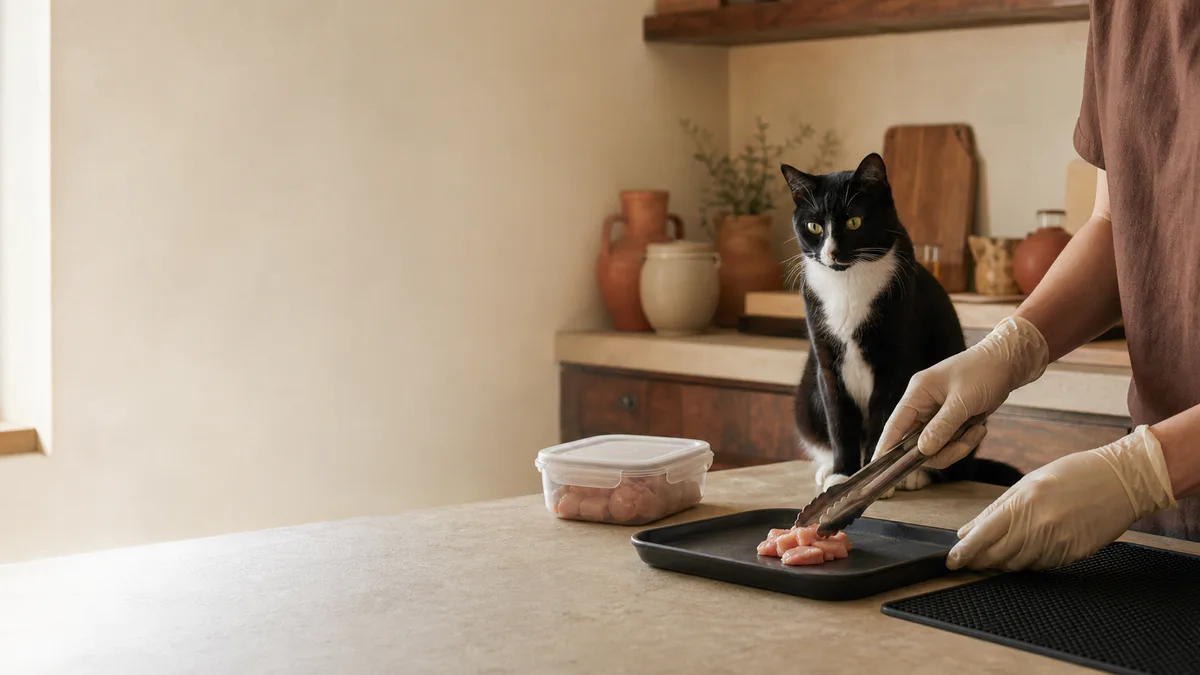
 Raw (BARF) diet for cats: real risks, portions and what vets actually say
Neither demonised nor idealised: what the evidence says about raw feeding in cats, the toxoplasma risk almost nobody mentions, and how to reduce it.
 Nutrition
 Taurine for cats: what it does, how much they need and which foods contain it
Cats can't make enough taurine, and a deficiency damages the heart and eyes. How much they need, where it's found, and the cooking mistake that destroys it.