Dog diarrhoea: causes, what to feed them and when to worry
Most cases of diarrhoea clear up on their own in a couple of days with a bland diet. We explain what to do, what to avoid, and when waiting stops being an option.
In this article
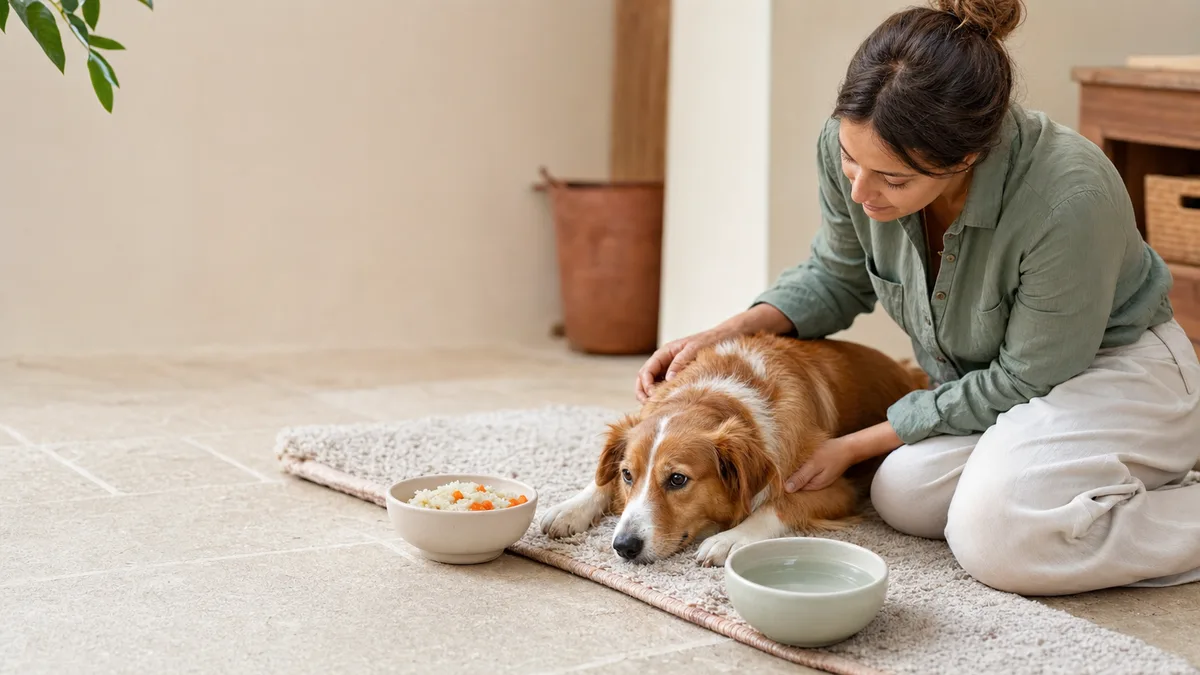
Diarrhoea in dogs usually has a fairly harmless cause — a change of food, something they ate, a bit of stress — and clears up on its own in 1-2 days with a bland diet. But some signs change the picture: blood, mucus, lethargy, or diarrhoea lasting more than a day or two. Here are the most common causes, what to feed your dog while they recover, and above all, how to recognise when it’s time to stop waiting and see the vet.
The most frequent causes
- A sudden change of diet. By far the most common cause, and the easiest to avoid: the gut needs time to adjust to a new food. If you’ve recently switched kibble or moved to natural food, check our guide to a gradual transition, over 7-10 days and without any scares.
- Dietary indiscretion: eating rubbish, spoiled leftovers, or something they shouldn’t (very common in dogs that scavenge outdoors).
- Stress or anxiety: a change of routine, travel, visitors, moving house; the digestive system is very sensitive to stress in dogs.
- Intestinal parasites (worms, giardia): more common in puppies or dogs with access to other animals’ faeces.
- Viral or bacterial infections: ranging from mild cases to parvovirus in unvaccinated puppies, which is serious and needs immediate attention.
- Food intolerances or allergies: if the diarrhoea recurs with certain ingredients on a regular basis, it may be worth investigating with your vet.
What to feed them while they recover
For a mild episode, with no blood or other warning signs, the schedule vets most commonly recommend is:
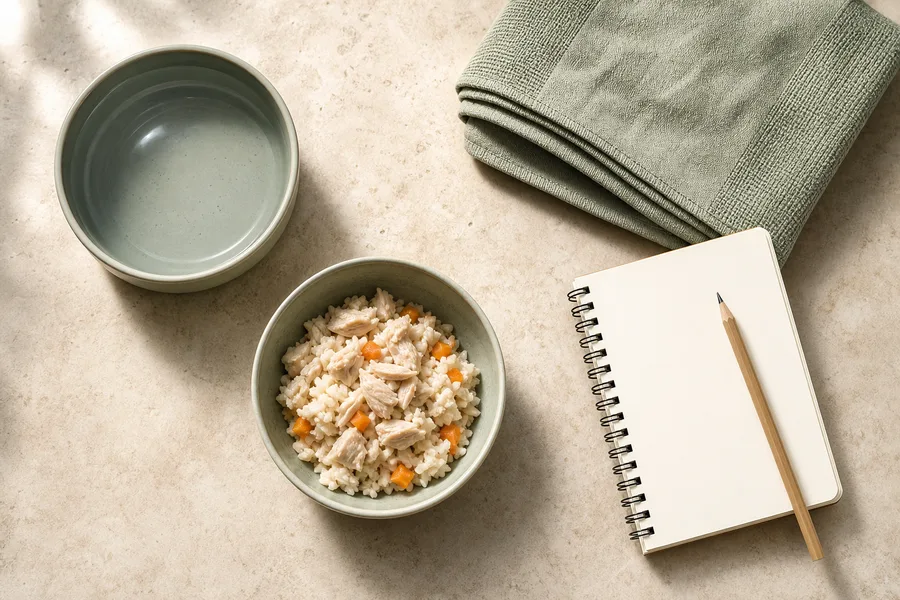
- Bland diet: boiled chicken with the skin and fat removed, mixed with well-cooked plain white rice, in small portions spread across several meals a day (rather than one or two large ones).
- Keep water available at all times, in small amounts if vomiting is also present, to avoid dehydration.
- Avoid treats, leftovers and food changes during these days: any novelty can prolong the problem.
- Reintroduce their usual diet gradually over 2-3 days, once the stools return to normal.
On yogurt, a very common question: a little unsweetened natural yogurt can provide probiotics, but it’s not a universal recommendation — many dogs tolerate dairy poorly — so it’s best to check with your vet before giving it as a rule.
Warning signs: when to see the vet
Don’t wait for it “to pass on its own” if any of these signs appear:
- Blood in the stool (fresh red, or very dark, tarry stools, which can point to bleeding higher up the digestive tract).
- Abundant, persistent mucus.
- Lethargy or loss of appetite in addition to the diarrhoea.
- Vomiting at the same time as the diarrhoea: this raises the suspicion of a more serious cause and the risk of dehydration. If your dog is also vomiting, you’ll find more detail in our guide on why dogs vomit.
- Puppies, especially without a completed vaccine schedule: the combination of diarrhoea (often bloody) and vomiting in a puppy is a classic sign of parvovirus, a serious veterinary emergency.
- Diarrhoea lasting more than 24-48 hours without improving.
- Signs of dehydration: dry or tacky gums, skin that’s slow to spring back when gently pinched, lethargy.
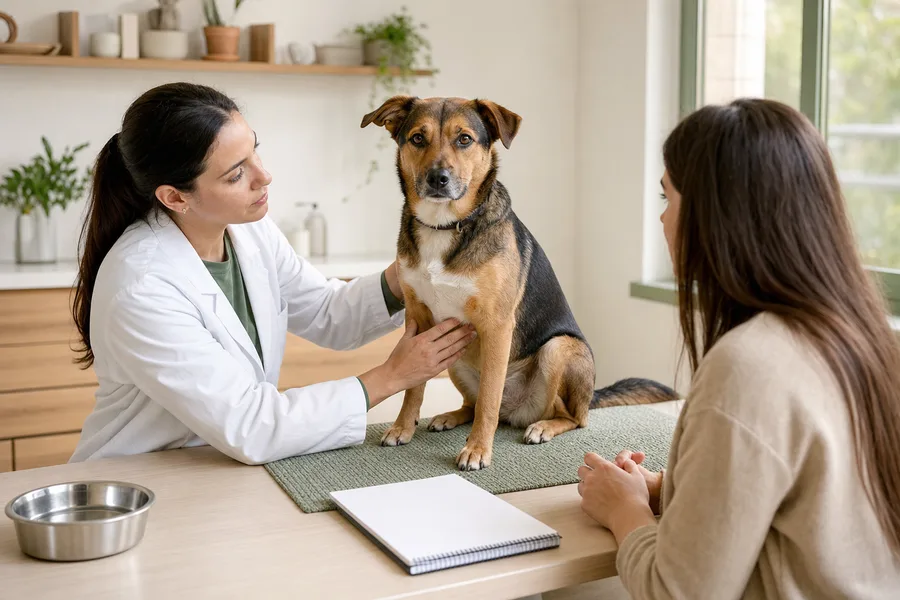
Faced with any of these signs, the recommendation is to see a vet as soon as possible, not to wait and see how things develop over more days.
How to prevent future episodes of diarrhoea
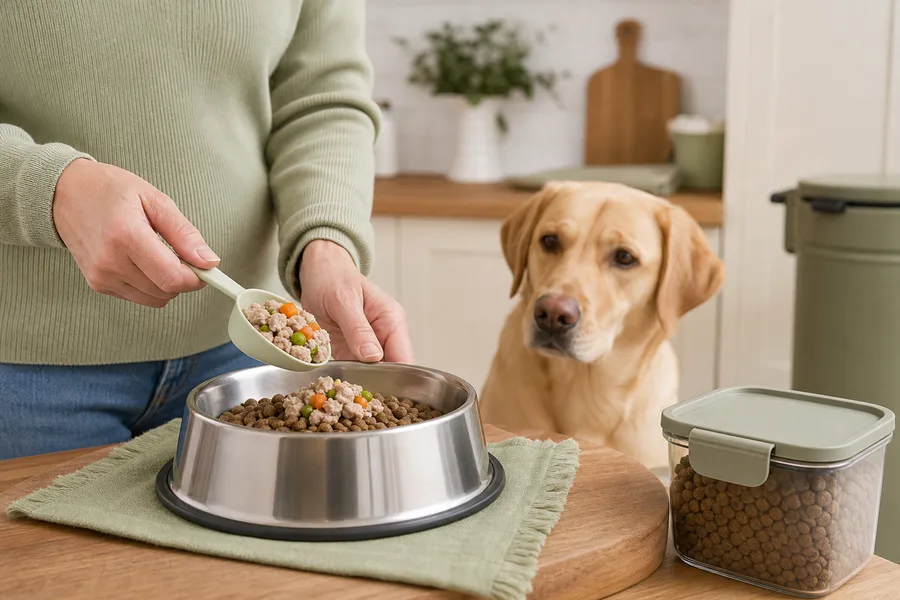
- Always change diets gradually, mixing the new food with the usual one over 7-10 days.
- Keep internal deworming up to date, which reduces the risk of parasite-related diarrhoea. You’ll find the general schedule in our guide to preventive puppy care.
- Keep your dog away from rubbish or leftovers on walks and at home.
- Introduce anything new (treats, snacks, new foods) one at a time, so you can identify the cause if something doesn’t agree with them.
Frequently asked questions
What can I feed my dog when they have diarrhoea?
The option most recommended by vets for a mild episode is a bland diet: boiled skinless chicken and plain white rice, in small portions several times a day, for 2-3 days before gradually returning to their usual diet.
Can you give rice to a dog with diarrhoea?
Yes, well-cooked plain white rice is one of the most recommended ingredients because it’s gentle on the stomach and has a binding effect. It’s usually combined with boiled chicken with the skin and fat removed, in small portions.
Is it a good idea to give yogurt to a dog with diarrhoea?
It depends on the dog. A little unsweetened natural yogurt can provide probiotics, but many dogs tolerate dairy poorly, and the yogurt could make the diarrhoea worse instead of better. It’s not a universal recommendation: check with your vet before giving it, especially if the diarrhoea has already lasted more than a day.
When should you take a dog with diarrhoea to the vet?
If there’s blood or mucus in the stool, if the dog is lethargic, if they’re vomiting as well, if it’s a puppy, if the diarrhoea lasts more than 24-48 hours, or if you see signs of dehydration (dry gums, lethargy), see a vet without waiting any longer.
Can my dog’s diarrhoea be caused by a change of food?
Yes, it’s one of the most common and most avoidable causes. Suddenly changing kibble or the type of food is the number-one cause of diarrhoea when moving to a new diet; the fix is to make the transition gradually, over 7-10 days.
This guide is informational and does not replace a consultation with your vet.
Keep reading
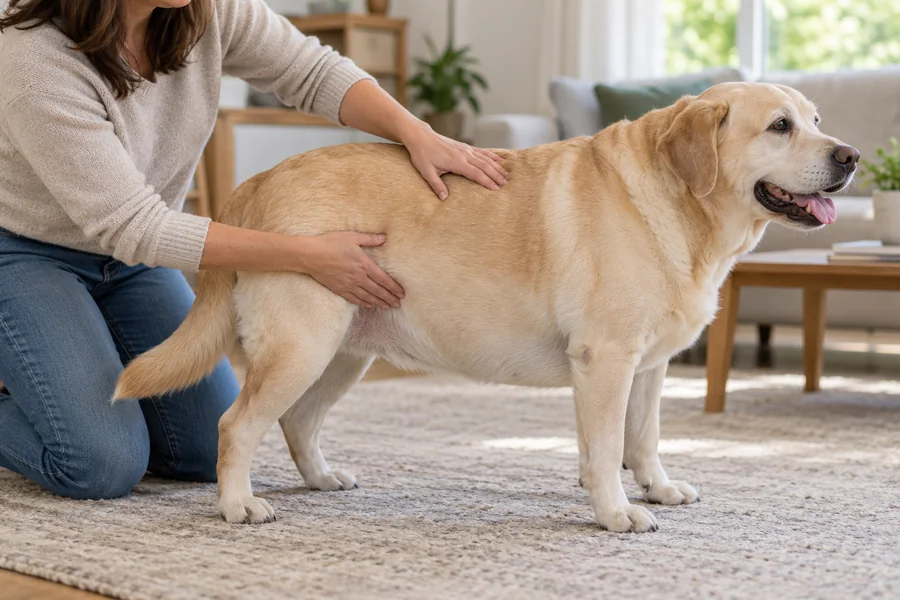 Health & wellbeing
 Overweight dog: how to help it lose weight (2026)
If you can't feel your dog's ribs, it's carrying extra kilos. How to check, what to rule out with your vet and a plan so it loses weight at a safe rate.
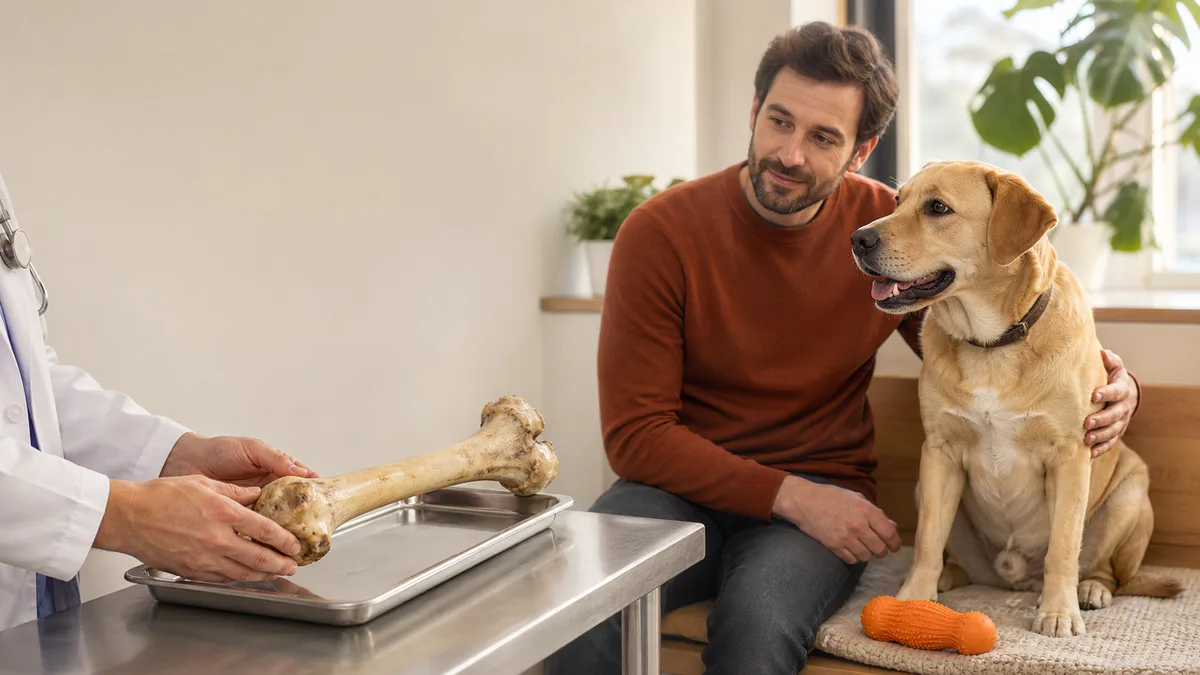 Health & wellbeing
 What bones can dogs eat (and which ones are dangerous)
Cooked bones, never. Raw ones, with conditions. Here's the full picture, without the vested interests of whoever is selling kibble or bones.
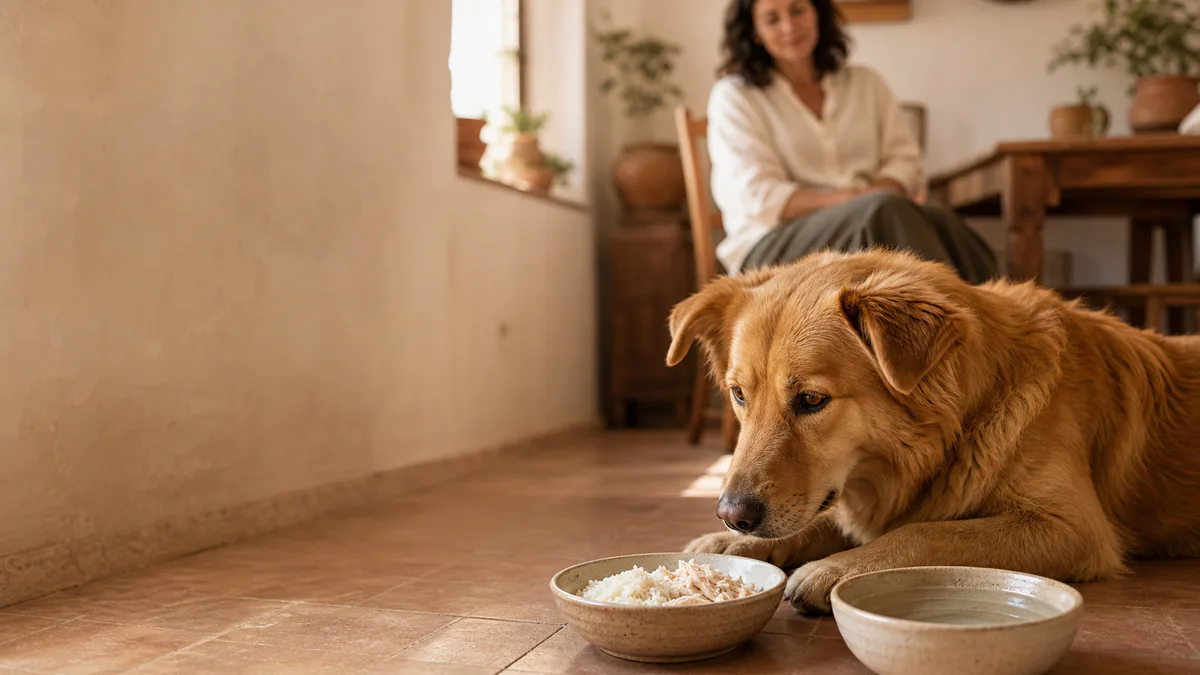 Health & wellbeing
 Bland diet for dogs: what to feed, how much and for how long
The chicken-and-rice routine done properly: proportions, real amounts, how long to keep it going, and the signs your dog needs a vet, not a diet.