Why is my dog vomiting: causes and when it's urgent to see the vet
A single vomiting episode usually isn't serious, but some signs are. We explain the most common causes and when to stop waiting and call the vet.
In this article
A single vomiting episode in a dog who stays active and keeps their appetite afterwards is almost never an emergency. But some signs — blood, repeated vomiting, lethargy, a swollen abdomen — are, and that’s when you shouldn’t wait for it to “pass on its own.” In this guide we explain the most common causes by type of vomit, what you can do for a mild episode, and above all, how to tell when it’s fine to wait and when it’s time to call the vet now.
The most frequent causes of vomiting in dogs
Most one-off vomiting episodes have fairly unworrying causes:
- Eating too fast, especially in greedy dogs or when several dogs are competing over food.
- Eating grass. It’s a very common behaviour; it’s not entirely clear why dogs do it, but an occasional vomit after eating grass usually isn’t a sign of anything serious on its own.
- Dietary indiscretion: eating something spoiled, rubbish, or food that doesn’t agree with them.
- A sudden change of diet. This is one of the most common causes and one of the easiest to avoid: if you’ve just changed their food, check our guide to a gradual transition.
- Motion sickness, typical on car journeys.
- Mild gastritis or a meal that didn’t sit well on a one-off basis.
These causes tend to produce isolated vomiting, with no fever or lethargy, and the dog is keen to play and eat again shortly after.
What the colour and type of vomit means
- Yellow (bile): common on an empty stomach, for example after many hours without eating. On its own, it’s usually not a worry; if it repeats for several days running, check with your vet.
- White foam: saliva mixed with some bile, also typical of an empty stomach or mild irritation. Same rule: a one-off with no other symptoms can be watched; if it repeats or comes with lethargy, see the vet.
- With blood (fresh red or looking like coffee grounds): always a reason to see the vet, never to wait at home.
- Undigested food, shortly after eating: can mean they’ve eaten too fast or too much; if it’s a one-off, it usually isn’t alarming.
- Together with diarrhoea: raises the odds of a more serious digestive cause (infection, parasites, poisoning); if it lasts more than a day, get it checked. You’ll find more detail in our guide on dogs with diarrhoea.
Warning signs: when to see the vet without waiting
These signs mean you shouldn’t wait to see if “it passes”:
- Blood in the vomit, in any amount.
- Repeated vomiting (more than twice in a day) or vomiting that continues into the next day.
- Lethargy or a total loss of appetite alongside the vomiting.
- A swollen or hard abdomen, especially if the dog tries to vomit without managing to: this is a classic sign of gastric torsion (bloat), a serious and potentially fatal veterinary emergency, more common in large, deep-chested breeds.
- Puppies who vomit, especially if they haven’t completed their vaccine schedule: the risk of parvovirus is real, and this virus can worsen very quickly in puppies.
- Suspected ingestion of a toxin (medication, toxic plants, cleaning products, chocolate, xylitol) or a non-digestible object.
- Can’t keep down even water, with a risk of dehydration.
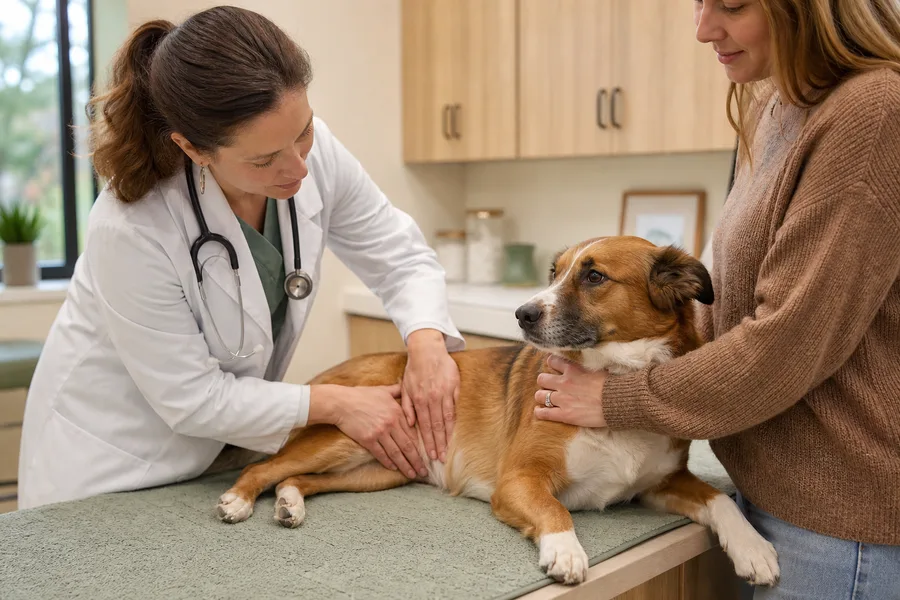
Faced with any of these signs, the recommendation is to see a vet or emergency vet service, not to wait or try home remedies.
What to do for a mild, one-off vomiting episode
If your dog is an adult, healthy, has vomited only once and is still active:
- Withhold food for around 12 hours (never for puppies, very small breeds, or dogs with pre-existing conditions such as diabetes: for them, check with your vet before fasting).
- Offer water in small amounts frequently, not all at once.
- Once the fast is over, reintroduce bland food in small portions: boiled skinless chicken and plain white rice is the combination vets most commonly recommend for these cases.
- Return to their normal diet gradually over the following days.
- If the vomiting recurs, any warning sign appears, or there’s no improvement within 24 hours, stop and check with your vet.
Frequently asked questions
Why is my dog vomiting yellow?
Yellow is usually bile, and it’s common when a dog vomits on an empty stomach (for example, after many hours without eating or first thing in the morning). A single episode with bile and no other symptoms usually isn’t cause for alarm, but if it repeats several days in a row, check with your vet.
Is it serious if my dog vomits white foam?
A one-off vomit of white foam (saliva mixed with a bit of bile, usually on an empty stomach) usually isn’t serious if the dog is otherwise active and has an appetite. If it repeats, comes with lethargy, or the abdomen looks swollen, see a vet, since it can point to something more serious.
What do I do if my dog vomits blood?
Vomiting blood (whether fresh red blood or something that looks like coffee grounds) is always a reason for urgent veterinary attention, not for waiting at home. It can be caused by ulcers, ingesting a toxin, a foreign object or more serious problems, and only a vet can diagnose it reliably.
How long can a dog vomit before you need to see the vet?
A single, isolated vomiting episode in an adult dog who is otherwise normal and has an appetite can be watched at home for a few hours. But if they vomit more than twice in a day, if the vomiting continues into the next day, or if lethargy, abdominal pain or an inability to keep down water shows up, don’t wait any longer: see a vet.
Can I feed my dog after they’ve vomited?
For a healthy adult with a mild, isolated episode, many vets recommend a brief fast (around 12 hours) and then reintroducing bland food in small amounts (boiled skinless chicken and plain white rice). This doesn’t apply to puppies, very small breeds or dogs with pre-existing conditions: in those cases, check with your vet before fasting on your own.
This guide is informational and does not replace a consultation with your vet.
Keep reading
 Health & wellbeing
 Overweight dog: how to help it lose weight (2026)
If you can't feel your dog's ribs, it's carrying extra kilos. How to check, what to rule out with your vet and a plan so it loses weight at a safe rate.
 Health & wellbeing
 What bones can dogs eat (and which ones are dangerous)
Cooked bones, never. Raw ones, with conditions. Here's the full picture, without the vested interests of whoever is selling kibble or bones.
 Health & wellbeing
 Bland diet for dogs: what to feed, how much and for how long
The chicken-and-rice routine done properly: proportions, real amounts, how long to keep it going, and the signs your dog needs a vet, not a diet.