My cat meows a lot at night: causes and what to do
Before blaming boredom, look at your cat's age: in an older cat, new night-time meowing can be a medical warning. Causes, a night plan and when to book a vet visit.
In this article
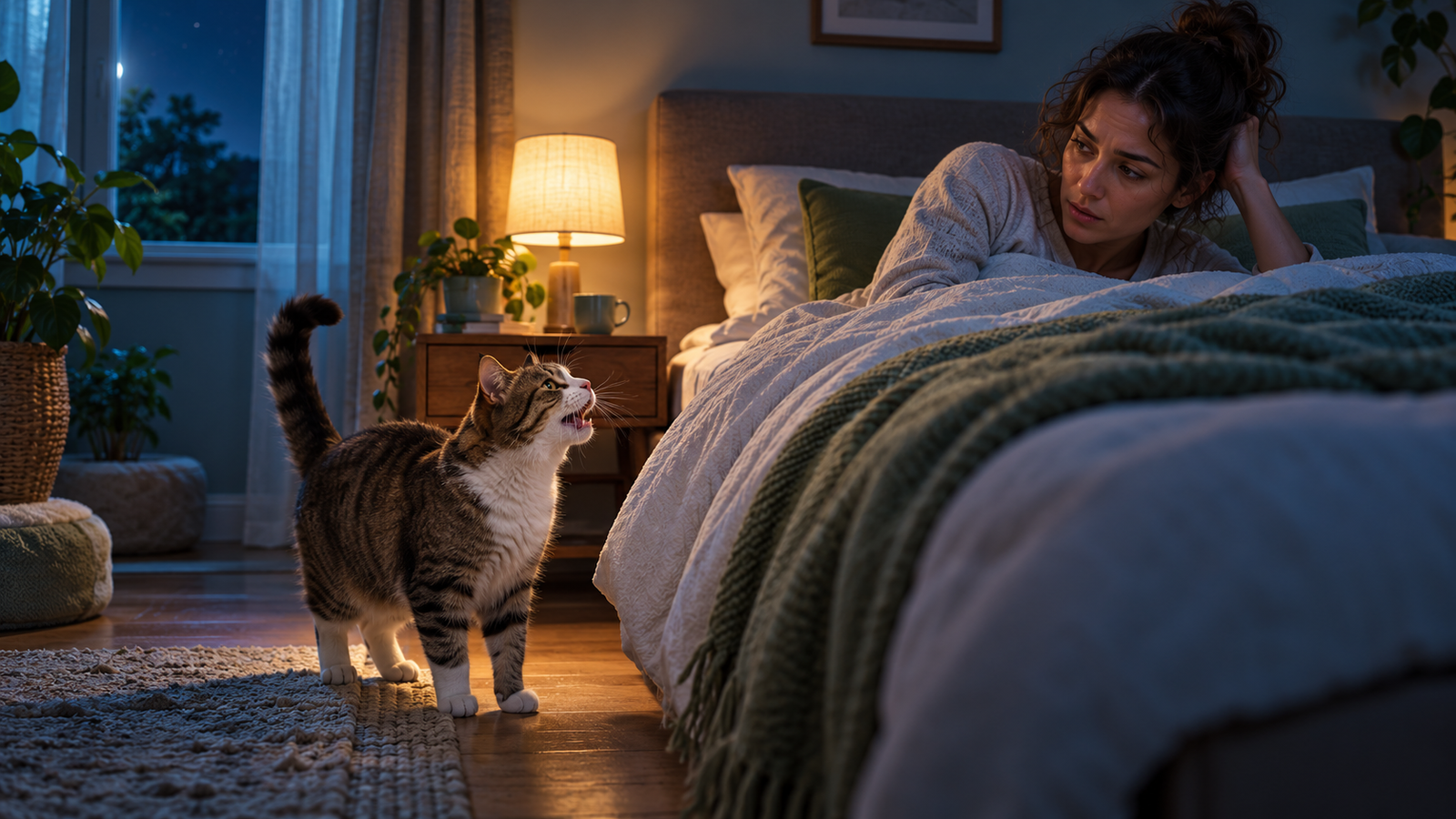
If your cat meows a lot at night, it almost never does it for no reason: it wants attention, food or play, it’s in heat, or something is wrong that you can’t see, and its age decides which to rule out first.
In a young cat there’s usually a routine cause that can be fixed at home. In a middle-aged or older cat, new night-time meowing deserves a vet check before any trick. Here are the causes by age, the signs that mean booking an appointment, and a plan for the first week, using positive reinforcement only.
Why your cat meows a lot at night: causes by age
Cats have energy peaks at dawn and dusk because they are crepuscular animals, so some night-time activity is normal. What changes with the years is what to rule out first.
| Age | What’s usually behind it | What to do first |
|---|---|---|
| Under 1 year | Unspent energy, play, changes at home or, if not neutered, heat | Play sessions before bed and talk to your vet about neutering |
| 1 to 6 years | Routine (hunger at odd hours, too little play by day), learning (it has been answered at some point), heat if not neutered, or something outside that unsettles it | Adjust the daytime routine and stop reinforcing the meowing; if the change is sudden, book an appointment |
| 7 years or older | Medical causes first: hyperthyroidism, pain, high blood pressure, loss of sight or hearing and, from age 11, cognitive dysfunction | See the vet before touching the routine |
The age limits are approximate: a 5-year-old cat with new meowing and changes in weight or appetite also deserves an appointment.
Routine causes get reinforced without meaning to. If one night you open the door, feed your cat or talk to it, it learns that meowing works, and the next night it will do it with more gusto.
Older cat meowing at night: hyperthyroidism, pain and cognitive dysfunction
With age, night-time meowing stops being a matter of habit and becomes a possible symptom. These are the causes ruled out first, with the veterinary sources we’ve read:
- Hyperthyroidism. It’s more common in cats over 7. The Merck Veterinary Manual lists hyperactivity, excessive vocalisation and weight loss despite a normal or increased appetite among its usual signs. International Cat Care adds restlessness and irritability, and notes it is rare under 7.
- Pain and high blood pressure. VCA Animal Hospitals recommends a vet examination for middle-aged or older cats to rule out pain, endocrine problems and high blood pressure. According to the MSPCA-Angell, high blood pressure is mostly diagnosed in cats with kidney disease and is treated with medication.
- Sight and hearing. Cats that see or hear less well tend to meow more, and with deafness they can meow very loudly without realising. According to MSPCA, leaving a light on at night can reassure a cat with reduced vision.
- Cognitive dysfunction. According to MSPCA-Angell, almost a third of cats aged 11 to 14 show at least one sign: waking at night (often meowing), interacting less, going outside the litter tray or wandering aimlessly. It can’t be cured, but medication, supplements and changes at home can improve the signs. The vet Xiana Costas Alonso, quoted by El Español, points to excessive night-time meowing as a warning sign of cognitive dysfunction, and the piece itself insists on ruling out physical causes first: hyperthyroidism, high blood pressure, chronic kidney disease and arthritis.
None of these can be diagnosed at home: the vet decides which tests are needed. And several are treatable, such as hyperthyroidism or high blood pressure: that’s why the appointment is worth it.
Signs that it isn’t just a habit: when to book an appointment
Book an appointment if any of these apply, even if the meowing only happens at night:
- The meowing is new and your cat is over 7.
- It loses weight even though it eats the same or more, or drinks more than usual.
- It is restless, irritable or more active than normal.
- At night it seems disoriented, wanders aimlessly or doesn’t react as usual.
- It goes outside the litter tray or meows when using it.
- Its appetite, sleep, grooming or the way it relates to you change all at once.
See the vet today, without waiting for a regular appointment, if on top of this your cat strains to urinate without success, has difficulty breathing, vomits several times or won’t eat or drink.
For the consultation you don’t need to know the cause: it’s enough to tell the vet what has changed, and the diary below is for that.
What to do if your cat meows a lot at night: a plan for the first week
This plan is for a young or adult cat with no other symptoms, or once your vet has already ruled out the medical side. It has two aims: that your cat reaches the night with its energy spent, and that the meowing stops working. It isn’t a guaranteed timeline: each cat takes as long as it takes.
By day: play, dinner and routine
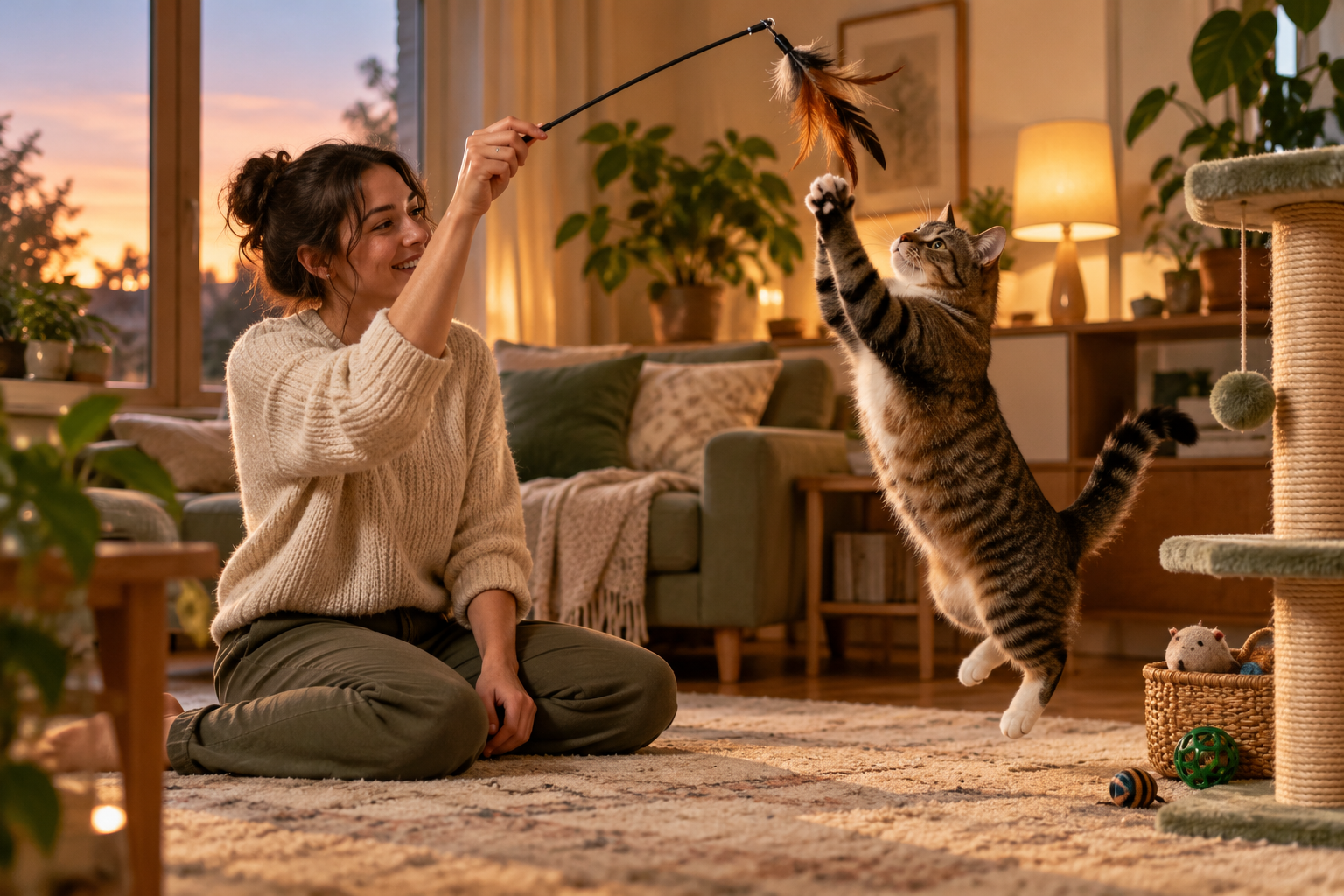
- Play with your cat two or three times a day, including one intense session just before you go to bed: a wand toy, a ball or anything it can chase. VCA proposes a daytime routine with social play and exploration toys to shift its activity to the day. A scratching post counts too: we cover it in why cats scratch furniture.
- Dinner after play. Hunt, eat, sleep is the cycle that El Español reports as the one that leaves a cat satisfied.
- Regular meals in the morning and in the evening, and a timed feeder or puzzle feeder so your cat doesn’t depend on you at 4 a.m., according to VCA.
- A clean litter tray and water to hand near where it sleeps. If you want to go over the basics, there’s litter training basics.
- If it isn’t neutered, talk to your vet: according to VCA, neutering should reduce vocalisation linked to heat. Its food needs change afterwards, and we explain how in feeding a neutered cat.
At night: don’t reward the meowing, reward the silence
- Don’t give food, attention or play when it meows. VCA is clear: vocalisation should never be rewarded with any of the three.
- Don’t scold it either. For a cat, a frustrated reaction is also attention, according to El Español.
- Reward the silence. A treat or a stroke when it’s calm, not when it calls.
- Expect it to get worse before it gets better. VCA talks about an “extinction burst”: when the meowing stops working, the cat insists more for a while. If you give in just once at that moment, it learns that insisting pays off.
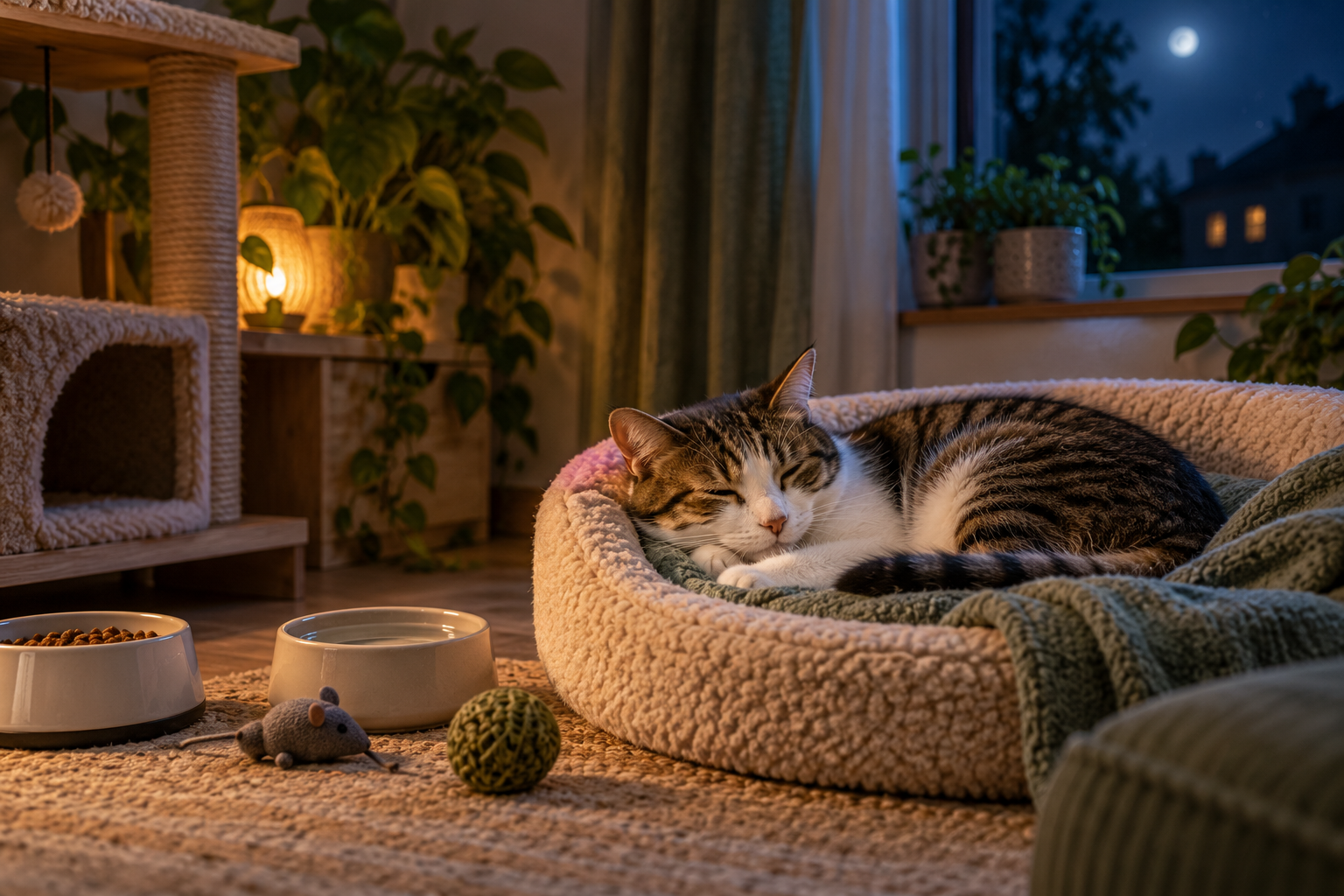
- If there’s no other way to sleep, keep it out of the bedroom, in a room with its bed, water and litter tray.
- If a street cat is waking it, block the view from the window and try white noise, as VCA suggests.
What never to do
No shouting, water sprays, scares or punishment of any kind. They don’t teach your cat what to do instead, only to fear you. Only positive reinforcement works here, just as in any other behaviour work with your cat.
Meowing diary: what to note before the vet visit
A week of notes is worth more than “meows a lot”. This information helps the vet, and you, to see whether the plan is working:
| What to note | What it’s for |
|---|---|
| Start time and duration | See whether it matches mealtimes, your routine or noises outside |
| What happened beforehand: play, food, visitors, noises | Separate routine causes from the rest |
| How your cat is by day: appetite, thirst, approximate weight, litter tray | Covers the medical signs we describe above |
| What you did and what your cat did | Spot whether you’re reinforcing it without meaning to |
| A short audio or video clip | Many cats behave differently at the clinic: recording it avoids the “it’s not doing anything now” |
FAQ
What does it mean if my cat meows a lot at night?
Your cat wants attention, food or play, is in heat (if not neutered) or has something physical going on. In a young cat it’s usually routine; in a middle-aged or older one, it’s worth ruling out hyperthyroidism, pain, high blood pressure or cognitive dysfunction with the vet before touching the routine.
Is it normal for an older cat to meow at night?
It can happen, but it shouldn’t be taken as normal. According to MSPCA-Angell, almost a third of cats aged 11 to 14 show at least one sign of cognitive dysfunction, and hyperthyroidism is more common above 7 years. New night-time meowing in an older cat deserves a vet visit.
Should I ignore my cat when it meows at night?
If your vet has already ruled out medical causes and your cat has food, water and a litter tray covered, yes: don’t respond with food, attention or play, because that reinforces the meowing. Expect it to get worse before it gets better, reward the silence when your cat is calm, and don’t shout or punish.
Does neutering stop night-time meowing?
It helps when the meowing is about heat: according to VCA, neutering should reduce vocalisation linked to sexual behaviour. It doesn’t solve meowing caused by boredom, hunger or medical problems. Ask your vet when to neuter.
When should I take my cat to the vet for night-time meowing?
When the meowing is new in a cat over 7, or comes with weight loss, more thirst, disorientation, going outside the litter tray or changes in appetite. If your cat strains to urinate, has difficulty breathing or won’t eat or drink, go today.
Does leaving food out at night stop the meowing?
It helps if hunger is the reason, but without giving in at 3 a.m.: serve dinner after the last play session or use a timed feeder, so the food arrives without your cat having to wake you.
This guide gives direction, not a diagnosis: when your cat’s behaviour changes, a vet visit is the first step.
Keep reading
 Training & care
Separation anxiety in dogs: what to do about it (2026)
Not everything that looks like separation anxiety is. Before assuming it, check the other causes that produce the same symptoms and what to do in each case.
 Training & care
How much natural food your dog needs by weight (table by brand)
The neutral gram-by-weight table you can use with any brand, plus an honest rundown: who has a real calculator and who's just saying they do.
 Training & care
Why does my cat scratch furniture (and how to redirect it without punishment)
Your cat isn't scratching the sofa to spite you: it's a need as basic as eating. The solution isn't to stop it scratching — it's to get it scratching somewhere else.