How to litter-train a cat (and what to do if it suddenly stops)
Almost no cat needs to be "taught" to use the litter box: what it needs is for you to make it easy. And if it suddenly stops using it, the first step is to check with the vet, not just look at its behaviour.
In this article
Almost no cat needs to be “taught” to use the litter box: it’s a natural instinct that shows up on its own, even in very young kittens. What does depend on you is making it easy from the start, and knowing what to do if a cat that was already using it well suddenly stops, because there’s almost always something more going on that needs fixing.
How to set up the litter box so your cat takes to it easily
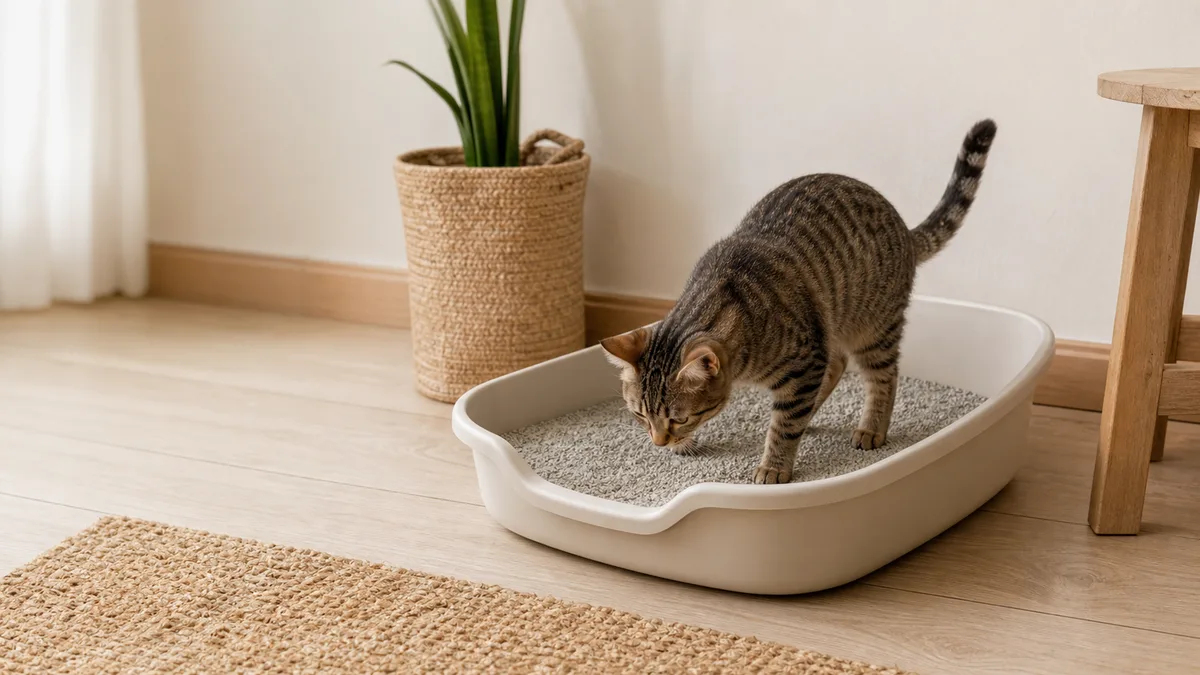
- Generous size. The cat should be able to turn around inside comfortably; a box that’s too small is one of the most common reasons cats reject it.
- Litter type. Most cats prefer clumping litter, fine-grained and without a strong scent. If you switch brands, do it gradually, mixing the new litter with the old.
- A quiet, accessible location. Away from food and water, somewhere with privacy but not boxed in or hard to reach (important for older cats or those with mobility issues).
- One per cat, plus one. The usual recommendation among feline behaviourists is one litter box per cat plus one extra, spread around the house rather than all grouped in the same room.
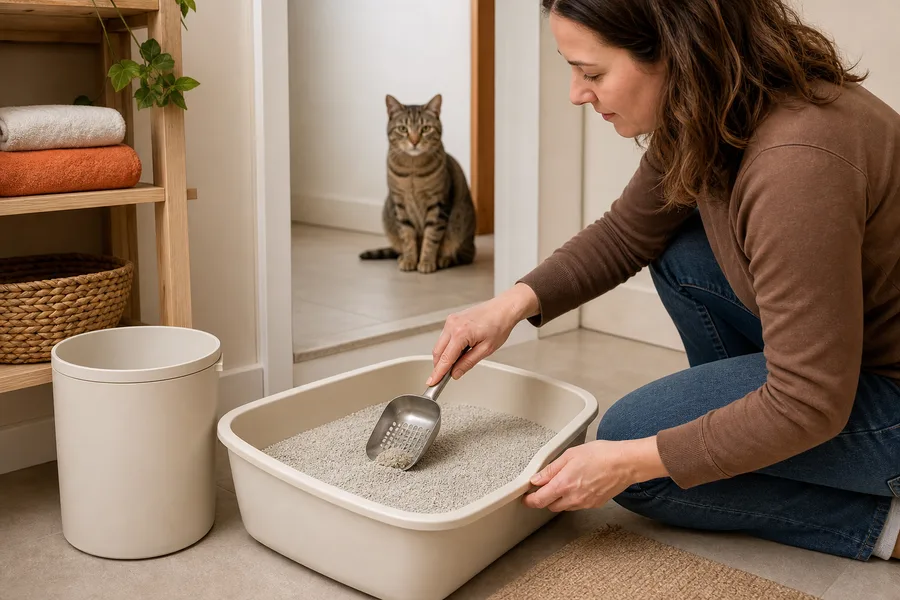
- Daily cleaning. Remove solid waste every day and change the litter completely on a regular basis; a dirty box is reason enough for a cat to look for somewhere else.
How to introduce a new kitten to the litter box
- Show it where the litter box is as soon as it arrives home.
- Gently place it inside after meals and after waking up, without forcing it to dig or holding its paws — that can create rejection instead of helping.
- Let it explore and dig at its own pace; you don’t need to repeat it many times — most kittens work it out on their own within a few days.
- Avoid moving the litter box to a new spot in the first few weeks, while the habit is still setting in.
Why a cat suddenly stops using the litter box
When an adult cat that’s been using the litter box reliably for a while suddenly starts toileting elsewhere, there’s usually a specific cause behind it, and it’s worth ruling out a medical one first:
- Medical causes: cystitis or a urinary infection, stones or crystals in the urine, constipation, joint pain that makes crouching or getting in and out of the box difficult.
- Management causes: a dirty box, a change in location or litter type, a box that’s too small or hard to access.
- Stress-related causes: the arrival of another cat or pet, a house move, building work at home, or competition for the box if there are several cats and too few boxes.
Warning signs: when to see the vet
See a vet without delay if you notice:
- Straining to urinate with little or nothing coming out, especially in male cats: this can be a urinary obstruction and is a genuine emergency.
- Blood in the urine.
- Crying out or other signs of pain while urinating or defecating.
- Frequent trips to the litter box with no result.
- A sudden, unexplained change in an adult cat that had been using the box normally for a while.
A behaviour change like this is almost never just “fussiness”: it’s information. Ruling out a medical cause first stops you treating what’s actually a real physical problem as if it were a behavioural one.
What not to do
Punishing a cat, shouting at it, or rubbing its nose in the mess doesn’t teach it anything: it creates fear and stress, which is precisely one of the most common reasons a cat stops using the litter box. If the problem persists after ruling out medical causes, a feline behaviourist can help you pin down the specific trigger.
If your cat is neutered and you’ve also noticed a change in its appetite or weight, you might find it useful to read how to adjust its diet after neutering.
Frequently asked questions
How do I teach a kitten to use the litter box?
You almost never need to actively “teach” it: it’s a natural instinct. Just gently place it inside the litter box after meals and naps for the first few days, without forcing it to dig or holding its paws, and let it explore on its own.
How many litter boxes do I need if I have more than one cat?
The usual recommendation among feline behaviourists is one litter box per cat plus one extra (for example, 3 boxes for 2 cats), spread across different spots in the house. Sharing a single litter box between several cats is a common reason one of them stops using it.
Why does my cat suddenly stop using the litter box?
It can be behavioural (a dirty box, a litter type it doesn’t like, a change of location, stress from another cat or a house move) or medical (cystitis, a urinary infection, stones or crystals, joint pain that makes crouching difficult). A sudden change in an adult cat that’s been using it well for a while is reason enough to rule out a medical cause with the vet first.
Is it an emergency if my cat strains to urinate and nothing comes out?
Yes, it’s a veterinary emergency, especially in male cats: it could be a urinary obstruction that can become life-threatening within hours if untreated. Don’t wait to see if it gets better on its own.
Does it help to punish a cat that urinates outside the litter box?
No, and it can make things worse: punishment creates stress and fear, which is precisely one of the most common reasons a cat stops using the litter box. What actually works is identifying the cause — medical or environmental — and fixing it, not telling it off.
Keep reading
 Training & care
 My cat meows a lot at night: causes and what to do
Before blaming boredom, look at your cat's age: in an older cat, new night-time meowing can be a medical warning. Causes, a night plan and when to book a vet visit.
 Training & care
 Separation anxiety in dogs: what to do about it (2026)
Not everything that looks like separation anxiety is. Before assuming it, check the other causes that produce the same symptoms and what to do in each case.
 Training & care
 How much natural food your dog needs by weight (table by brand)
The neutral gram-by-weight table you can use with any brand, plus an honest rundown: who has a real calculator and who's just saying they do.