Separation anxiety in dogs: what to do about it (2026)
Not everything that looks like separation anxiety is. Before assuming it, check the other causes that produce the same symptoms and what to do in each case.
In this article
Separation anxiety in dogs is a real fear and panic disorder, not a “spiteful” or “badly trained” dog. It appears when a dog is left alone or separated from its attachment figure, and before assuming that’s what it is, it’s worth ruling out other causes that produce similar symptoms: boredom, frustration, noise phobia or an underlying medical problem aren’t treated the same way. Here are the real symptoms, what gets mistaken for anxiety, and what to do, with veterinary input and no punishment involved.
What separation anxiety in dogs is, and isn’t
It’s a fear and panic disorder that appears when your dog is left alone or separated from the person or people it’s most attached to. It isn’t a case of “too much affection”, revenge or jealousy: it’s an intense, genuine emotional response, and the dog doesn’t control it voluntarily.
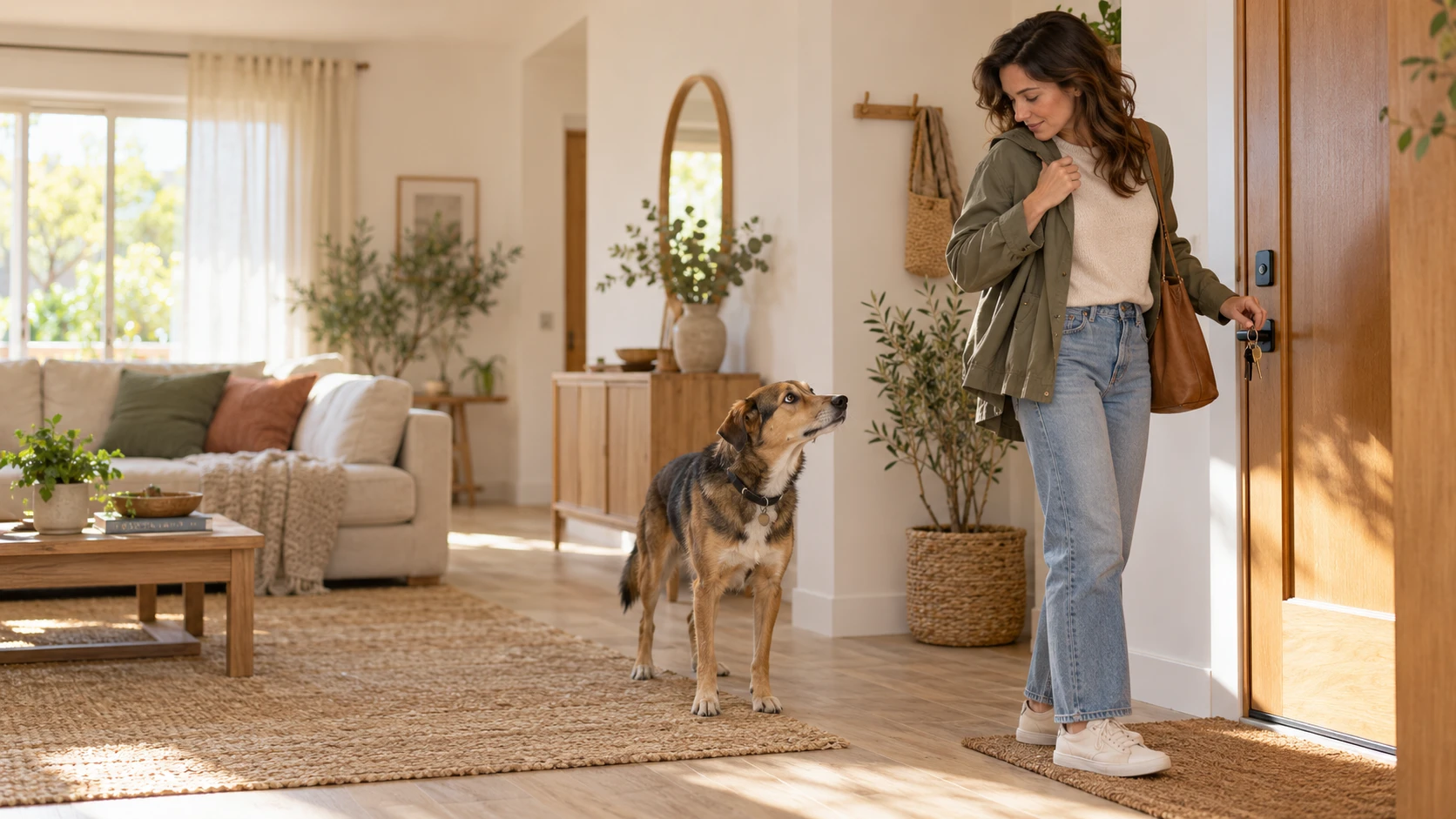
It can start 20-30 minutes before you leave, once the dog learns to associate your movements (picking up keys, putting on a coat) with you leaving, or it can appear right at the moment you go. In most cases it eases off once you’re back, but in some dogs it lasts considerably longer.
Symptoms of separation anxiety in dogs
- Vocalising: constant barking, howling or whining.
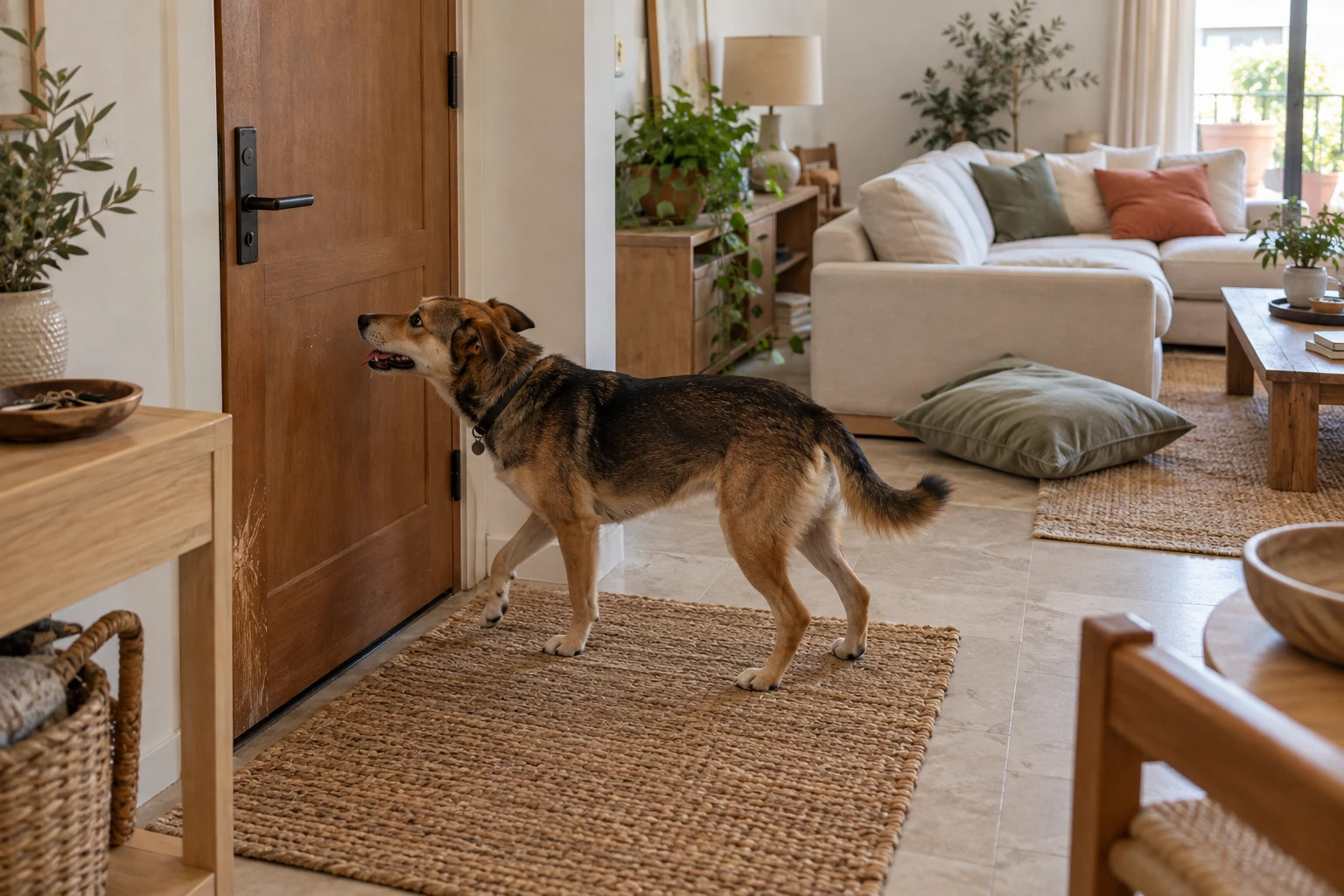
- Destructive behaviour: scratching or breaking doors, frames or furniture, almost always while looking for a way out, not out of spite.
- Inappropriate elimination: urinating or defecating indoors despite being house-trained and having gone outside shortly before.
- Physical signs: excessive panting and drooling, trembling, restlessness that doesn’t settle.
- Anticipation signs: getting worked up at the sight of keys, a coat or other routines that precede you leaving.
In more serious cases, loss of appetite, gastrointestinal problems or self-harming behaviour can appear: if you’re at that point, it’s time for a vet or behaviourist, not more trial and error on your own.
Before assuming it’s anxiety: what gets mistaken for it
This is the part most guides skip. Not every symptom that looks like separation anxiety actually is, and mixing them up leads to the wrong fix:
- Boredom or lack of stimulation. A dog without enough physical or mental exercise can destroy things out of sheer lack of activity, not panic at being left alone.
- Confinement intolerance. If the problem is a specific space (a crate, a closed room) rather than the absence itself, the cause and the fix are different.
- Frustration. Wanting to get to something specific (another dog, a noise outside) and not being able to.
- Seeking food, play or company. Normal exploratory behaviour misread as distress.
- Incomplete house-training. If a puppy hasn’t fully learned where to go, accidents indoors have nothing to do with separation.
- Noise phobia. Building work, storms or fireworks while you’re out can look like separation anxiety without being it.
- An underlying medical problem. Pain, digestive issues or neurological conditions can produce similar symptoms.
If you’re not sure which of these is the real cause, a behaviourist or a vet specialising in behaviour is who should tell them apart, not a generic guide online.
What to do: real steps
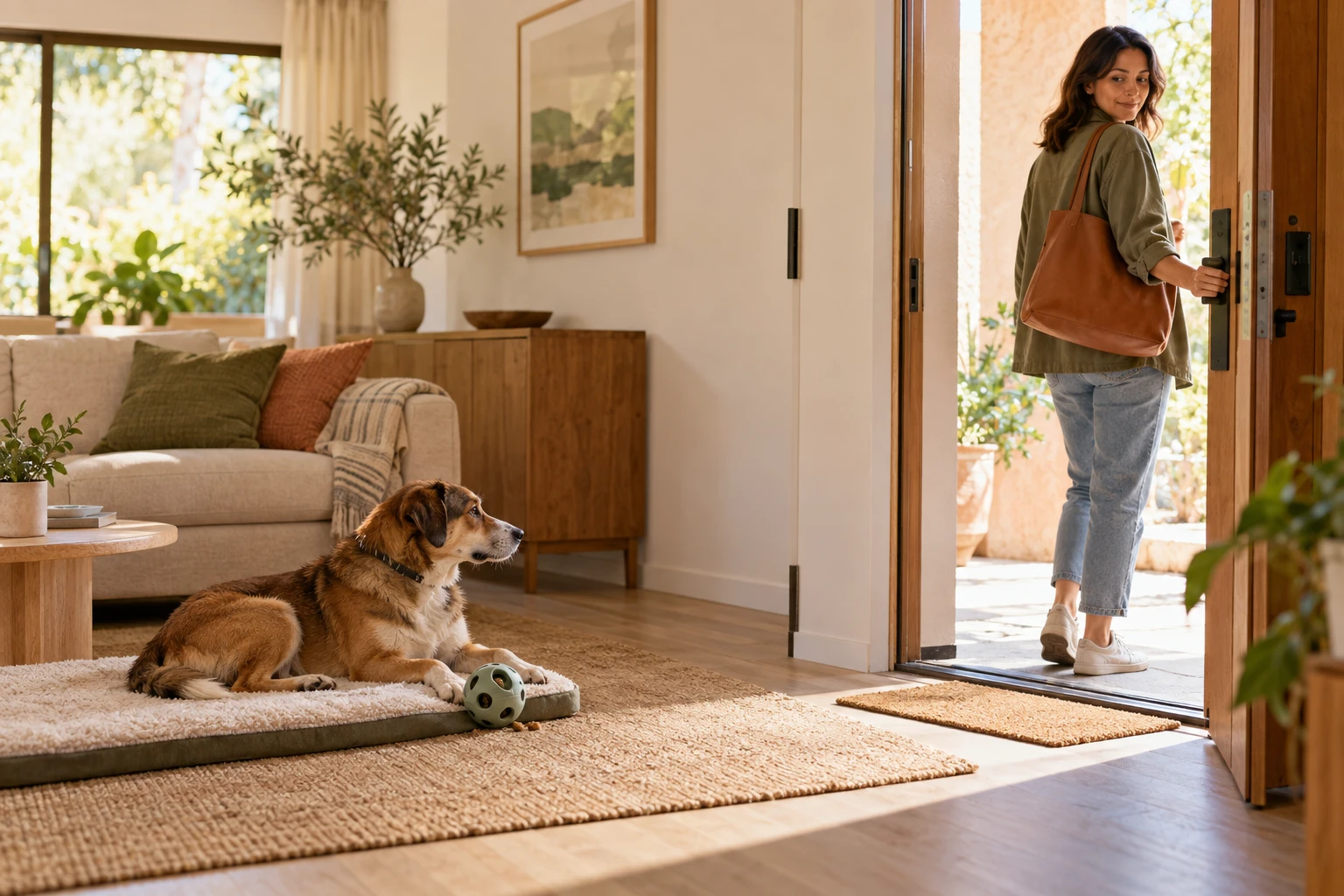
- Gradual absences. Leave the house for a few seconds and build the time up very slowly, without going past your dog’s panic threshold. If it gets worked up again at the previous level, you’ve moved too fast.
- Low-key goodbyes and arrivals. No long goodbyes or excited greetings: the more neutral the moment, the less contrast there is with the absence.
- Physical and mental tiredness before you leave. A walk or some playtime beforehand helps your dog be calmer when it’s time to be alone.
- Professional help for moderate or severe cases. A dog trainer or behaviourist for the desensitisation work, and your vet if medication or pheromones need assessing. That decision isn’t one to make at home.
What never to do
Don’t punish your dog on arriving home to find a mess or something out of place. It doesn’t connect the punishment with what it did minutes or hours earlier: it just learns your arrival can be bad, which makes the anxiety around the next separation worse. Positive reinforcement is the only thing that works here, same as with any other behaviour work with your dog.
When to see a vet or behaviourist
Get professional help as soon as possible if there’s self-harm, intense physical symptoms (vomiting, diarrhoea, extreme panting), the gradual-absence approach isn’t improving things, or the situation is causing a serious conflict with neighbours or housing. A vet is who should assess whether medication is needed: never decide or dose that yourself, and be wary of any protocol that doesn’t come from a professional who has actually seen your dog. You can read more professional guidance in AniCura’s guide to separation anxiety (in Spanish).
If what’s actually worrying you is non-stop barking, we cover that separately in why does my dog bark. And if the root cause might go back to a shaky start in the first weeks at home, check how to train a puppy.
FAQ
What is separation anxiety in dogs?
A real fear and panic disorder a dog experiences when left alone or separated from its attachment figure. It isn’t revenge, jealousy or poor training: it’s an intense emotional response, and it’s treated as such.
What are the symptoms of separation anxiety?
Vocalising (barking, howling, whining), destructive behaviour (doors, frames, furniture), inappropriate elimination despite being house-trained, excessive panting and drooling, restlessness, and getting worked up at the sight of keys or a coat before you leave.
How do I know if it’s separation anxiety or just boredom?
Boredom tends to produce behaviour spread out over time, not concentrated right at the moment you leave. If the symptoms start within minutes of you leaving and repeat at that exact moment every time, it points more towards anxiety. If you’re genuinely unsure, talk to a behaviourist: there are other possible causes (frustration, noise phobia, an underlying medical problem) that aren’t treated the same way.
What should I do if my dog has separation anxiety?
Gradual absences starting with seconds and building up very slowly, low-key goodbyes and arrivals, physical and mental exercise before you leave, and professional help (a trainer or behaviourist, and a vet if medication is needed) for moderate or severe cases.
Does punishing my dog help with separation anxiety?
No, and it can make it worse. The dog doesn’t connect a punishment on your arrival with something it did minutes or hours earlier: it just learns that your arrival can be bad, which raises the anxiety around the next separation. Positive reinforcement is the only approach that works here.
When should I take my dog to a vet or behaviourist for separation anxiety?
If there’s self-harm, intense physical symptoms (vomiting, diarrhoea, extreme panting), the problem isn’t improving with gradual absences, or it’s causing a serious conflict with neighbours or housing. A vet can assess whether medication is needed; never decide or dose that yourself.
Keep reading
 Training & care
My cat meows a lot at night: causes and what to do
Before blaming boredom, look at your cat's age: in an older cat, new night-time meowing can be a medical warning. Causes, a night plan and when to book a vet visit.
 Training & care
How much natural food your dog needs by weight (table by brand)
The neutral gram-by-weight table you can use with any brand, plus an honest rundown: who has a real calculator and who's just saying they do.
 Training & care
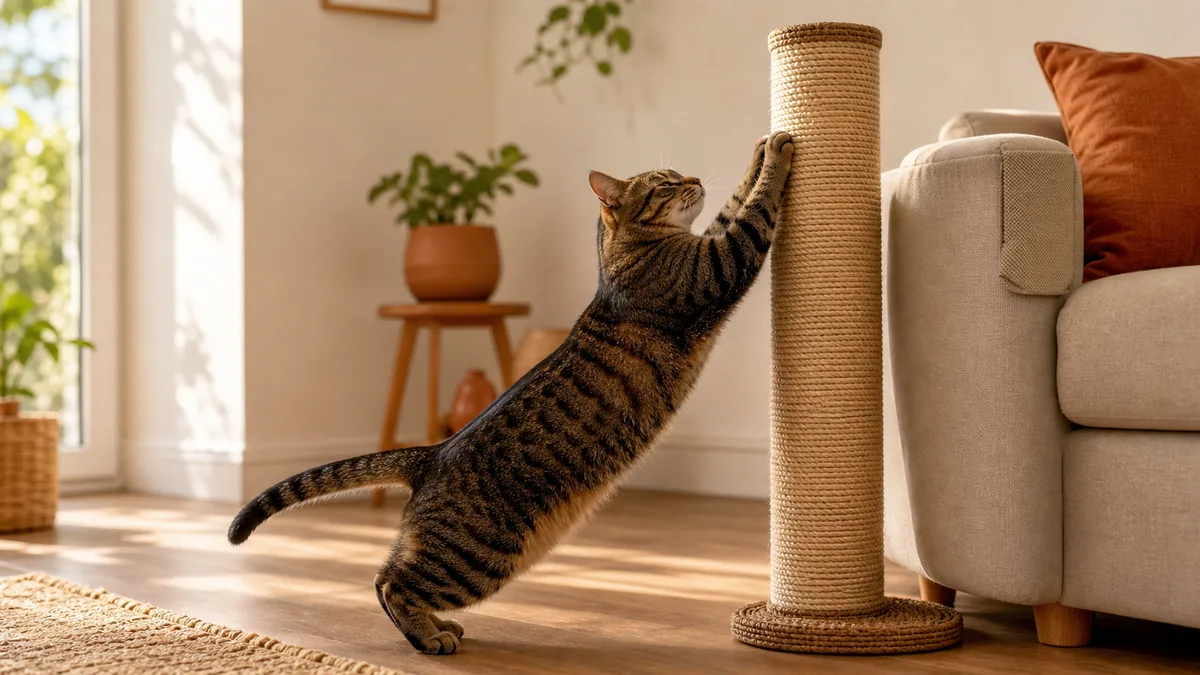
Why does my cat scratch furniture (and how to redirect it without punishment)
Your cat isn't scratching the sofa to spite you: it's a need as basic as eating. The solution isn't to stop it scratching — it's to get it scratching somewhere else.