Dog constipation: causes and when to call the vet
A constipated dog strains and passes little or nothing. What the MSD manual, VCA, PDSA and AKC say about causes, food and water, and when to call the vet.
In this article
Dog constipation means straining to defecate and passing little or nothing, and the veterinary sources don’t set the same deadline for going to the clinic. VCA says 48-72 hours since the last bowel movement; AKC, more than 48 hours, and sooner if the dog strains; PDSA, at any sign; the MSD manual sets no deadline. Below, the causes, what the sources say about food and water and the signs that can’t wait, with every fact attributed to its source.
How to recognise dog constipation
According to VCA’s factsheet, a constipated dog usually tries to defecate several times without success and may circle, drag its bottom along the floor, squat often or, in severe cases, whine; it may also have a reduced appetite, vomiting, weight loss or a tense, painful abdomen.
The MSD manual adds that the faeces are usually hard and dry and that, if something is in the way, such as an enlarged prostate or enlarged lymph nodes, they can come out thin or ribbon-shaped. PDSA’s guide also mentions groaning when defecating and excessive grooming of the back end.
It isn’t always diarrhoea. VCA and PDSA agree that a constipated dog can pass small amounts of liquid faeces: for VCA, the fluid that leaks around the hard mass, which is sometimes mistaken for diarrhoea; for PDSA, the only thing a blockage lets through. If your dog strains and only passes liquid, tell your vet exactly what you’ve seen.
Causes of dog constipation
| Cause | What the sources say |
|---|---|
| Bones and indigestible material | VCA: the most common cause is eating irritating or indigestible substances, such as plant material or bones. MSD cites hair and bones; PDSA, bones and sharp objects |
| Too little water | MSD: not drinking enough water contributes to hard, dry faeces. VCA and PDSA: any illness or situation that causes dehydration |
| Pain when defecating | MSD cites pain during defecation; VCA, conditions such as osteoarthritis; PDSA, arthritis, hip dysplasia, a fractured pelvis and anal problems |
| Prostate | VCA: benign prostatic hyperplasia in intact males or other prostate diseases. MSD: an enlarged prostate or lymph nodes. PDSA: an enlarged prostate or prostate cancer |
| Medicines | VCA: antihistamines, diuretics, narcotic painkillers and sucralfate. AKC: opioids, diuretics, antihistamines, some antacids and cancer drugs |
| Underlying diseases | VCA: hypothyroidism, hyperparathyroidism, neurological diseases, colon or rectal tumours and megacolon. MSD: hypothyroidism and spinal cord disease. PDSA: an underactive thyroid and colitis |
| Day to day | VCA: little exercise, a sudden change of food, fear or anxiety, long hair. PDSA: being very overweight and matted hair around the anus. AKC: old age and, according to the vet Veronica Villanueva, brachycephalic breeds such as bulldogs or pugs, toy breeds and dachshunds |
When dog constipation means a trip to the vet
The sources set the deadline in different places, so here they are separately:
| Source | When to consult |
|---|---|
| VCA | If there is no bowel movement within 48-72 hours of the previous one |
| AKC | More than 48 hours without defecating means a risk of obstipation. If the dog strains, before 48 hours, especially if it won’t eat or vomits; if it isn’t defecating but is otherwise normal, it can wait 48 hours, although it’s best to contact the clinic at 24 |
| PDSA | At any sign of constipation: it can get worse the longer you wait, so as soon as possible |
| MSD manual | Sets no deadline; describes “quite ill” animals with lethargy, depression, loss of appetite, vomiting and abdominal discomfort |
The sources we read set no different deadline for puppies, older dogs or dogs with a known illness: if in doubt, call your clinic without waiting. Before you go, note when the last bowel movement was, whether your dog has changed food or medication and whether it tends to eat bones, rubbish or other hard things: AKC and MSD advise taking that information.
What the sources say about food and water
They don’t all say the same thing, which is why it’s worth asking your clinic before touching your dog’s food:
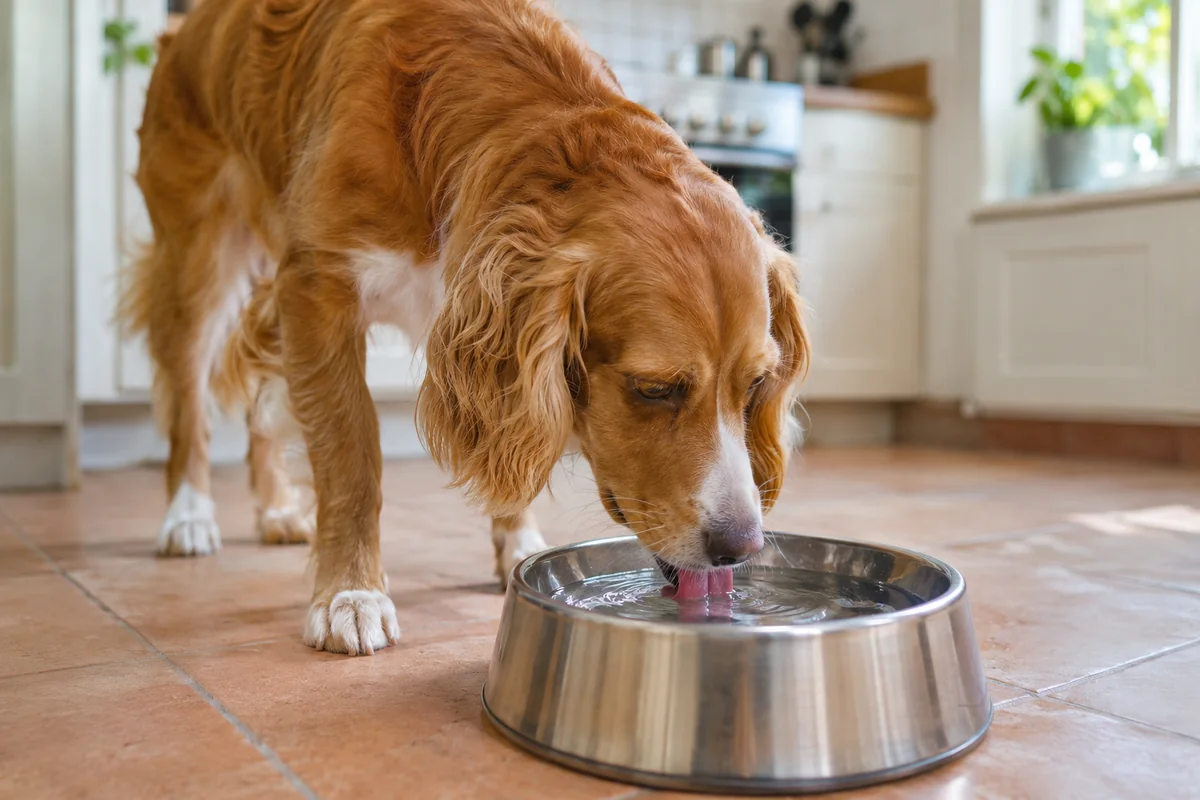
- MSD manual: affected dogs should be given plenty of water; mild constipation is often treated with a high-fibre diet, preventing the dog from eating bones or other objects, easy access to water and suitable laxatives, usually only for a short period. To prevent relapses, vets usually recommend fibre, accessible water and frequent opportunities to defecate.
- VCA: depending on the cause, a low- or high-fibre diet may be needed, or a therapeutic diet; in all cases, VCA encourages drinking water and limiting access to bones.
- PDSA: in an otherwise healthy dog, it helps to keep up exercise, plenty of drinking, a suitable weight and a suitable diet.
- AKC (its article on constipation): if the constipation started in the last 48 hours, AKC offers canned pumpkin (never pumpkin pie filling, which often contains xylitol or other toxic ingredients), canned wet food, other sources of fibre such as brown rice, carrot, leafy greens or unsalted green beans, more access to water and a gentle walk.
What not to do: give laxatives formulated for people (MSD: they can be very dangerous for animals) or use laxatives or enemas without the vet’s instruction (AKC asks this for both and PDSA, for laxatives). AKC also asks you to consult before adding supplements or probiotics.
Bones and natural food: what the sources cite
VCA points out that the most common cause of constipation is eating irritating or indigestible substances, such as plant material or bones, and advises limiting access to bones; MSD cites hair and bones among the material that obstructs, and PDSA, bones and sharp objects.
None of these pages talks about natural food as such. If you feed BARF or food with bone, tell your vet: you have the menus compared in our raw dog food comparison and in the one on cooked food.
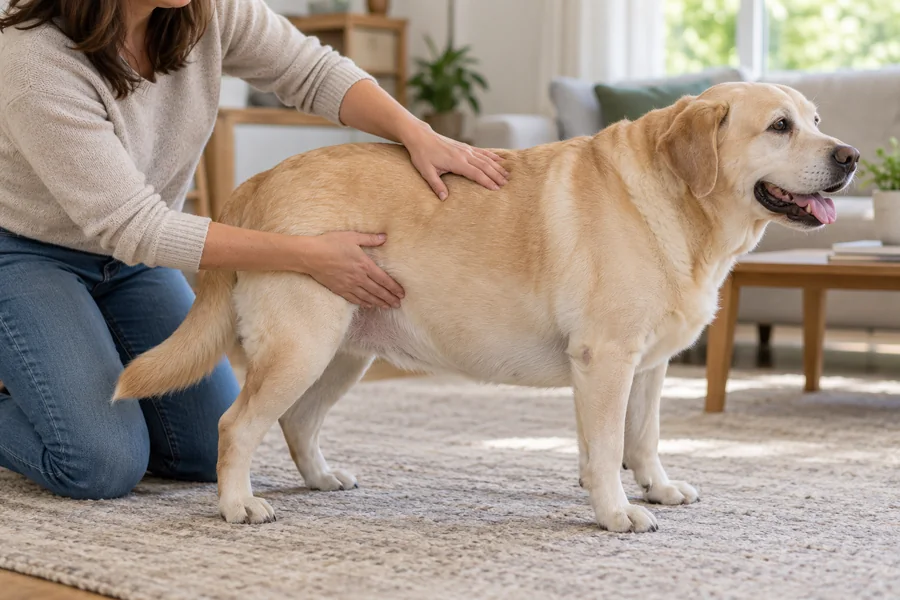
PDSA also cites being overweight among the causes: see our guide to an overweight dog.
What if it’s a cat?
In cats the guidance is different: the MSD manual warns that laxatives formulated for people can be very dangerous for animals, especially for cats. Don’t apply to a cat what works for a dog without asking your clinic; for other digestive problems, there are our guides to cat diarrhoea and cat vomiting.
Frequently asked questions
When does dog constipation need a vet?
It depends on the source: VCA, if there is no bowel movement within 48-72 hours of the previous one; AKC, if it goes past 48 hours, and sooner if the dog strains, won’t eat or vomits; PDSA, at any sign, as soon as possible. If in doubt, call your clinic.
How many days can a dog go without pooing?
The sources don’t give a single figure: VCA asks you to call the vet if 48-72 hours pass since the previous bowel movement, and AKC warns that going past 48 hours without defecating means a risk of obstipation and advises contacting the clinic at 24 hours if the dog is otherwise normal. If it also strains, vomits or won’t eat, don’t wait.
What can I give a constipated dog?
The sources don’t agree: the MSD manual mentions plenty of water and a high-fibre diet in mild cases; VCA adds that, depending on the cause, a low- or high-fibre diet may be needed; AKC cites canned pumpkin (not pumpkin pie filling), wet food and more water in the first 48 hours. Ask your vet first, especially if the dog strains or seems listless.
Do olive oil or other home remedies help a constipated dog?
The VCA, MSD, PDSA and AKC pages we read don’t cite oil as a remedy. AKC offers canned pumpkin, wet food, other sources of fibre and water in the first 48 hours, and asks you to consult the vet before giving supplements or remedies; MSD and PDSA reserve laxatives for what the vet advises.
Can I give my dog a human laxative or an enema?
Not on your own: the MSD manual warns that laxatives formulated for people can be very dangerous for animals; AKC asks that laxatives and enemas be prescribed by the vet and PDSA, that laxatives be used only on their advice. MSD and PDSA describe the enema as something the vet does, in severe cases under anaesthetic; MSD adds manual removal.
Why does my dog strain but only pass liquid?
VCA explains that a constipated dog can pass small amounts of liquid faeces that get mistaken for diarrhoea, and PDSA says it’s the only thing a blockage lets through. If your dog strains and passes little, tell your vet exactly what you’ve seen.
This guide is informational and does not replace a consultation with your vet.
Keep reading
 Health & wellbeing
Cat vomiting: causes and when to call the vet
A healthy cat vomits now and then, but sometimes it's a sign of something more. What Cornell, MSD, VCA and International Cat Care say about causes, food and when to call the vet.
 Health & wellbeing
Cat diarrhoea: causes and when to see the vet
A cat's diarrhoea is usually brief, but sometimes it hides an illness. What International Cat Care, Cornell and MSD say about causes, food and when to call the vet.
 Health & wellbeing
Overweight dog: how to help it lose weight (2026)
If you can't feel your dog's ribs, it's carrying extra kilos. How to check, what to rule out with your vet and a plan so it loses weight at a safe rate.