Best wet dog food (2026): an honest guide and what the OCU says
Wet food, yes, but which one? We explain what to check on the label, what the OCU really says, and when shop-bought wet food isn't enough and it's time to look for something better.

In this article
The best wet food for a dog is one with a high percentage of real meat or fish as the main ingredient, real moisture (not just filler sauce), and a complete-food formulation. As for the OCU question: the most cited analysis from Spain’s consumer organisation (OCU) on dogs covers dry kibble, not wet food —we explain what it says and how to apply the same criteria to canned food. This guide helps you read the label with a critical eye, decide whether it’s worth it compared to kibble, and know when supermarket wet food isn’t enough.
What to look for on a wet food label
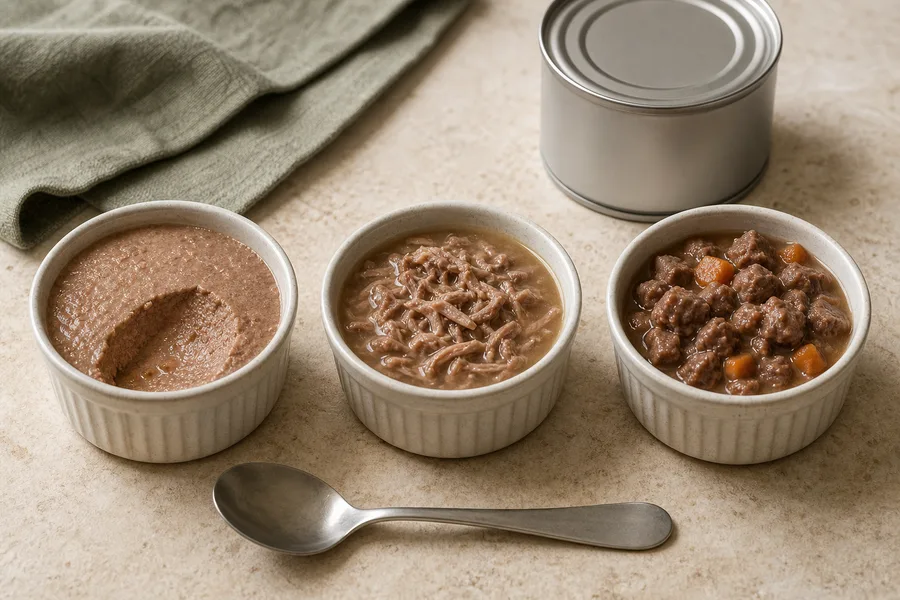
Wet food has a bad reputation as “filler in sauce”, and sometimes that’s true. Here’s what separates a good one from a marketing one:
- % of real meat or fish, not generic “derivatives”. The higher and more specific (“70% chicken” is better than “meat and derivatives”), the better.
- That it’s labelled “complete food”, not “complementary” or a simple topper, if it’s going to be their main food.
- Little gelatine or sauce filler. Part of the “moisture” in some cheap cans is just water with thickeners, not extra nutrients.
- No sugars or colourings that add nothing for the dog (though they do appeal to your eye on the shelf).
What does the OCU really say about dog food?
It’s worth being precise here, because a lot of people search for “best wet dog food OCU” expecting a ranking that doesn’t actually exist. The OCU’s most widely cited media analysis evaluated dry kibble for medium-breed adult dogs, and highlighted brands such as Purina Pro Plan Optibalance, the lamb kibble from Edgar & Cooper, and Mercadona’s Compy Supreme. It’s a useful analysis, but it isn’t about wet food.
That doesn’t invalidate the question: the OCU’s underlying criteria (actual composition, transparency, value for money) are exactly the same ones you should apply to a can. Translated to wet food: be wary of any brand that doesn’t state how much meat it contains, and don’t pay extra just for the packaging.
Wet food vs. kibble: which is better?
There’s no universal winner; it depends on what you need:
| Wet food | Kibble | |
|---|---|---|
| Hydration | High (70-80% water) | Low: depends on the dog drinking separately |
| Palatability | Higher, ideal for fussy eaters | Good, but lower on average |
| Convenience and storage | Needs refrigeration once opened | Very convenient, shelf-stable at room temperature |
| Cost per serving | Usually higher | Usually lower |
| Dental hygiene | Contributes less than chewing kibble/bone | Somewhat better due to the friction |
Combining the two (wet food + kibble, or wet food + cooked natural food) is a very reasonable option: it provides hydration and palatability without giving up convenience. Many vets recommend it, especially for dogs that drink little or have a history of urinary problems.
The natural alternative: fresh-cooked food instead of canned
If what you’re after in a wet food is mainly hydration and real meat, there’s an option many owners don’t consider: fresh-cooked food (not canned). Brands like COCOSI, Dogfy Diet, Food for Joe, Guau&Cat or Wild Balance have a very high natural moisture content —since they’re fresh cooked meat and vegetables, not a long-life canned product— with no need for thickeners or filler gelatine. It isn’t “wet food” in the classic supermarket-can sense, but it achieves the same goal (hydration, palatability, real ingredients) through a different process. If you want to compare this option with natural kibble and the BARF diet, you’ll find the details in our guide to choosing natural food and in our comparison of the best brands.
Special cases: senior dogs, kidney disease and diabetes
Here the criteria change completely:
- Senior dogs: can benefit from more wet food for the hydration, and because they often chew less well. Keep looking for the same quality criteria, adjusting calories to their activity level.
- Kidney disease or diabetes: these are not supermarket choices. They are therapeutic diets that require specific control of phosphorus, protein or carbohydrates, and are prescribed on a case-by-case basis. Don’t self-select a “kidney” or “diabetic” wet food unless your vet has recommended it: the wrong diet can make the condition worse.
How to decide in practice
- Check the label before the brand. Attractive packaging tells you nothing; the ingredients list does.
- Decide the “why”: are you after hydration, convenience, or getting a fussy dog to eat? The answer changes the choice.
- If your dog has a medical condition, the vet decides, not the supermarket shelf.
- Introduce any change gradually to avoid diarrhoea; you’ll find the step-by-step in our guide to switching your dog from kibble to natural food.
Frequently asked questions
What is the best wet dog food according to the OCU?
The OCU doesn’t usually analyse wet food as its own category: its most cited analysis on dogs covers dry kibble, where it highlighted Purina Pro Plan Optibalance, the kibble from Edgar & Cooper, and Mercadona’s Compy Supreme. For wet food, apply its same underlying criteria: check the ingredients list, the % of meat, and avoid label marketing with no substance behind it.
What wet food is good for a dog?
One that declares a high percentage of meat or fish as the main ingredient, with real moisture (not just filler sauce or gelatine) and no unnecessary sugars or colourings. The more specific the protein source on the label, the better.
Is wet food better than kibble for dogs?
It depends on the goal. Wet food provides more water and tends to be more palatable. Kibble is more convenient, stable and cheaper to store. Many vets recommend combining both, or prioritising wet food for dogs with urinary problems or poor appetite.
Can I give my dog wet food every day?
Yes, if it’s a complete and balanced formula (not just a treat or topper). Check that the label says “complete food”, not “complementary”, and adjust the daily amount to their weight.
What wet food is good for a dog with kidney problems or diabetes?
These are therapeutic diets that require a vet’s prescription, not self-selection. A dog with kidney failure or diabetes needs very specific control of phosphorus, protein or carbohydrates depending on their case. Always check with your vet before choosing a wet food for these conditions.
Keep reading
 Comparisons & guides
 Best cooked natural dog food: 6 brands (2026)
Six cooked-food brands compared on price per kilo, how to buy and reviews. Guau&Cat is the cheapest per kilo; the others that publish a price run from €7.24 to €13.13/kg.
 Comparisons & guides
 Natural dog food without a freezer: options (2026)
Freezer-free doesn't mean the same for every brand. We compare six, from the price benchmark (Guau&Cat, frozen) to those that last months in the pantry.
 Comparisons & guides
 Arquivet alternatives: real price and reviews (2026)
Arquivet FreshHome is the only one on this list that doesn't need a freezer, but it's dog-only and its reputation barely has a sample to judge.