Best wet cat food (2026): an honest guide and what OCU says
Wet food, yes — but which one? We explain what to check on the label, what OCU really says, and why hydration matters more in cats than in almost any other pet.
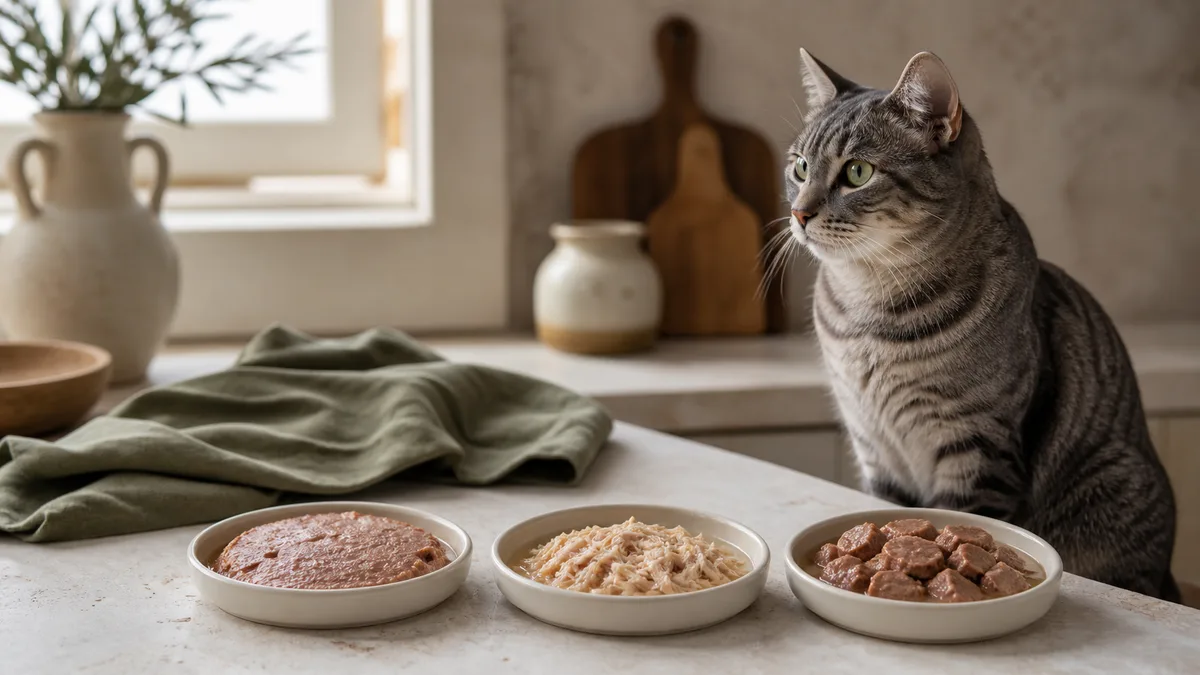
In this article
The best wet food for a cat is one with a high percentage of real meat or fish as the main ingredient, that provides real moisture (not just filler sauce), is formulated as a complete food, and covers taurine. On OCU: its most cited analyses for cats cover kibble, not wet food — we explain what it actually says and how to apply the same criteria to cans. This guide helps you read the label with a critical eye, decide whether it’s worth it compared with kibble, and understand why hydration matters more in cats than in almost any other pet.
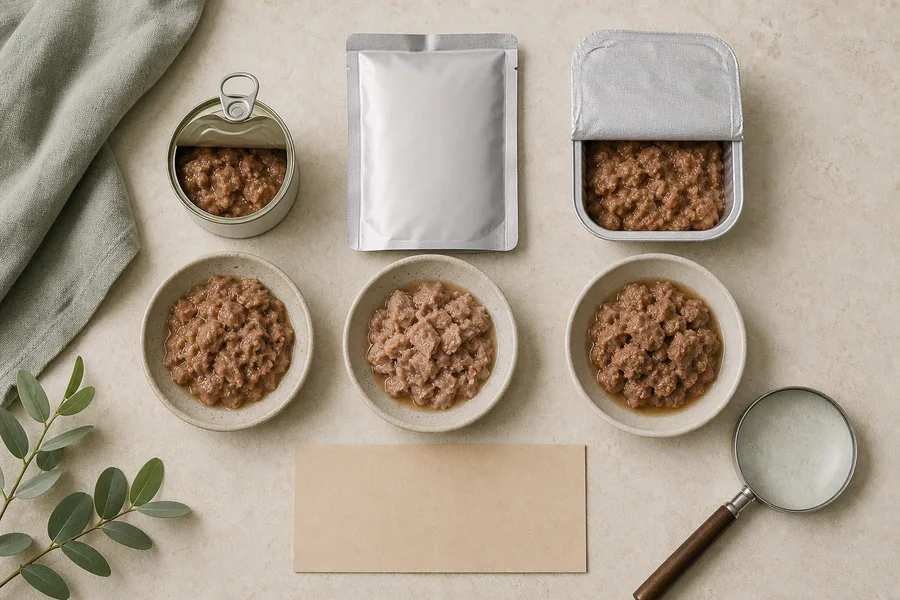
What to check on the label of wet cat food
Wet food has a reputation for being “filler with sauce”, and sometimes that’s true. Here’s what separates a good one from a marketing gimmick:
- % of real meat or fish, not generic “derivatives”. The higher and more specific (“chicken”, “tuna”), the better.
- That it’s a “complete food”, not “complementary” or a simple topper, if it’s going to be their main diet.
- That it declares taurine. In cats this isn’t optional: a deficiency can cause heart and vision problems. If the label doesn’t mention it, be wary.
- Little gelatine or sauce filler. Part of the “moisture” in some cheap cans is just water with thickeners, not extra nutrients.
- No sugars or colourings that add nothing for the cat.
What does OCU really say about cat food?
It’s worth being precise here, because a lot of people search for “best wet cat food OCU” expecting a ranking that doesn’t quite exist. OCU — Spain’s consumer organisation — focuses its feline nutrition analyses mainly on commercial kibble by value for money, where a supermarket brand usually stands out. It’s a useful reference for kibble, but it doesn’t evaluate wet food as its own category.
That doesn’t invalidate the question: OCU’s underlying criteria (real composition, transparency, value for money) are exactly the same ones you should apply to a can. Translated to wet food: be wary of any brand that doesn’t state how much meat it contains, and don’t overpay just for the packaging or “premium” marketing.
Wet food vs. kibble for cats: which is better?
In dogs, the difference is mostly a matter of preference. In cats, there’s a biological factor you can’t ignore: they have a low thirst drive, adapted to get almost all their water from food (as a wild carnivore would, eating prey that’s roughly 70% water). A continuous dry diet keeps a cat in a tighter hydration state, which encourages the urinary problems (crystals, feline idiopathic cystitis) that are so common in the species.
| Wet food | Kibble | |
|---|---|---|
| Hydration | High (70-80% water) | Low: depends on the cat drinking separately, and they drink little by instinct |
| Palatability | Higher, useful for cats with a poor appetite or senior cats | Good, but lower on average |
| Convenience and storage | Needs the fridge once opened | Very convenient, stable at room temperature |
| Cost per serving | Usually higher | Usually lower |
| Urinary prevention | Clear advantage from the water content | Relies on the cat compensating by drinking, which they don’t always do |
Combining the two (wet food + kibble, or basing the diet on wet food) is what many vets recommend, especially for cats with a history of urinary issues, neutered cats, or cats that naturally drink very little.
Special cases: neutered cats, seniors and urinary/kidney problems
Here’s where the criteria get more specific:
- Neutered cat: its energy expenditure drops and the risk of being overweight rises. Wet food helps because it satisfies the cat on fewer empty calories and provides water. You’ll find the full detail in our guide on feeding a neutered cat.
- Senior cats: can benefit from more wet food, both for the hydration and because they often chew less well or eat less due to age-related loss of appetite.
- Urinary or kidney problems: these are not supermarket-aisle choices. These are diets that often need specific control of phosphorus, protein or minerals, and are prescribed case by case. Don’t self-select a “urinary” or “renal” wet food without your vet having indicated it: the wrong diet can make the condition worse.
How to decide in practice
- Look at the label before the packaging. Nice design tells you nothing; the % of meat and the taurine mention do.
- Decide the why: are you after hydration, getting a fussy cat to eat, or urinary prevention? The answer changes the choice.
- If your cat has a medical condition, the vet decides, not the supermarket shelf.
- Introduce any change gradually, over 7-10 days: cats are especially neophobic (wary of anything new). You’ll find the step by step in our guide to switching from kibble to natural food (the gradual-transition approach is the same for cats).
If you’re after a broader comparison of brands and formats (wet, cooked, BARF), you’ll find the detail in our guide to natural cat food.
Frequently asked questions
What’s the best wet cat food according to OCU?
OCU doesn’t usually analyse wet cat food as its own category: its most cited analyses focus on commercial kibble by value for money. For wet food, the same underlying criteria apply: check the % of real meat or fish, avoid gelatine filler, and don’t overpay just for the packaging.
What wet food is good for a cat?
One that declares a high percentage of meat or fish as the main ingredient, provides real moisture (not just sauce or filler gelatine), is formulated as a complete food, and covers taurine. The more specific the protein source on the label, the better.
Is wet food better than kibble for cats?
In cats, wet food has an advantage that matters a lot: it provides water. Cats instinctively drink little, and a continuous dry diet encourages urinary problems. Kibble is more convenient and cheaper, but many vets recommend basing the diet on wet food or combining it with kibble, especially in cats with a history of urinary issues.
Can I give my cat wet food every day?
Yes, if it’s a complete formula (not a treat or topper) and covers taurine. Check the label says “complete food”, not “complementary”, and adjust the daily amount to their weight and activity level.
What wet food is best for a neutered cat?
One that’s high in protein, with the portion adjusted to its new (lower) energy expenditure after neutering, and good hydration, which helps prevent the urinary problems that are so common in neutered cats. You’ll find the full detail in our guide on feeding a neutered cat.
Keep reading
 Comparisons & guides
 Best cooked natural dog food: 6 brands (2026)
Six cooked-food brands compared on price per kilo, how to buy and reviews. Guau&Cat is the cheapest per kilo; the others that publish a price run from €7.24 to €13.13/kg.
 Comparisons & guides
 Natural dog food without a freezer: options (2026)
Freezer-free doesn't mean the same for every brand. We compare six, from the price benchmark (Guau&Cat, frozen) to those that last months in the pantry.
 Comparisons & guides
 Arquivet alternatives: real price and reviews (2026)
Arquivet FreshHome is the only one on this list that doesn't need a freezer, but it's dog-only and its reputation barely has a sample to judge.